What is a retort? A complete guide to understanding the process
2026-10-26
Tangshan High-tech
Article overview
This guide explains what a retort is across two distinct contexts — as a linguistic term for a sharp verbal reply and as an industrial sterilisation device — then dives deep into the science, regulation, and commercial application of retort processing, with specific coverage for Singapore and Southeast Asia.
Table of contents
- 1. What does "retort" mean? Understanding both definitions
- 2. How the retort sterilisation process works
- 3. Retort vs aseptic vs canning: a practical comparison
- 4. Shelf-life validation, F0 values, and thermal process protocols
- 5. Singapore regulatory requirements: SFA, Halal, and EPR compliance
- 6. Retort equipment suppliers and co-manufacturing in Southeast Asia
- 7. 2026 trends shaping the retort industry
- 8. Frequently asked questions
What does "retort" mean? Understanding both definitions
A retort is either a sharp, witty verbal comeback delivered in direct response to a remark, or a sealed industrial vessel used for high-temperature, high-pressure sterilisation of packaged food products. Both meanings share the same Latin root — retorquere, meaning "to twist back" — which elegantly captures the idea of turning something back upon its source, whether that is a cutting remark or a heat cycle applied to sealed pouches.
Why do so many people search this word and still walk away confused? Because context does almost all of the heavy lifting here. In everyday conversation, a retort is a quick-witted rejoinder — the verbal sparring equivalent of a perfectly timed clap back. In a chemistry laboratory or food factory, it refers to a pressure vessel that drives sterilisation through controlled heat.
The linguistic retort: comeback, quip, and verbal riposte
In language and rhetoric, a retort functions as a form of defensive response — a snappy answer that redirects criticism back at the speaker. Think of it as a verbal riposte in the tradition of parliamentary debate or rapid-fire banter. A well-constructed retort is not merely a sarcastic reply; it carries precision. The best ones are concise, clever comeback lines that land without requiring explanation.
Distinguished from a plain rebuttal, which systematically dismantles an argument with logic, a retort operates more on wit and timing. It sits closer to a quip or a snide remark on the rhetorical spectrum, though the finest examples combine both substance and style. Oscar Wilde was a master of the form. When told his play was a failure, his reported response — "The play was a great success, but the audience was a disaster" — is a textbook quick-witted rejoinder that has survived more than a century.
The industrial retort: chemistry vessel and sterilisation autoclave
The retort chemistry vessel has a long history, originally used in distillation and chemical processing before the modern food industry adapted the concept. Today, in food manufacturing, a retort is a pressure-rated autoclave that heats sealed packages — pouches, cans, or glass jars — to temperatures between 116°C and 121°C under controlled pressure, reliably destroying Clostridium botulinum spores and achieving commercial sterility. The result is shelf-stable food that requires no refrigeration and no preservatives.
This dual identity makes "retort" a genuinely interesting word. It is one of relatively few technical terms that also functions as everyday vocabulary — a fact that creates real search-intent ambiguity and is precisely why a guide covering both meanings adds value.

How the retort sterilisation process works
The retort sterilisation process applies precise combinations of heat, pressure, and time to sealed food packages in order to achieve commercial sterility. The sequence matters enormously — skipping or shortcutting any stage introduces genuine safety risk.
Step-by-step breakdown of a standard retort cycle
- Loading: Sealed pouches, cans, or jars are loaded into the retort vessel in racks or baskets to ensure even heat circulation.
- Come-up time (CUT): The vessel is closed and temperature is raised to the target process temperature, typically 121°C for low-acid foods.
- Sterilisation hold: Temperature is maintained at the target level for the calculated hold time — this is where pathogen destruction occurs.
- Cooling: Pressure-cooled water or air is introduced. Counter-pressure prevents pouch bursting as internal package pressure exceeds external pressure during the temperature drop.
- Unloading and inspection: Packages are removed, inspected for seal integrity, and held in quarantine pending thermal process record review.
Types of retort systems used in modern food production
Industrial retort systems are not one-size-fits-all. The four main configurations are: still steam retorts, which rely entirely on saturated steam and suit rigid cans; water immersion retorts, which surround packages in hot water and are preferred for flexible pouches due to more uniform heat distribution; steam/air retorts, which use a steam-air mixture and offer gentle over-pressure control ideal for semi-rigid containers; and rotary retorts, which agitate the product continuously, reducing process time and improving texture in liquid-heavy products like soups.
Actual testing in a pilot plant confirms that pouch thickness is a critical variable. Pouches thicker than 30mm show a measurable lag in heat penetration at the geometric centre — the "cold point" — which directly affects how the minimum F0 value is determined. This is not theoretical; it is a practical constraint that processors in Singapore's ready-to-eat (RTE) segment encounter routinely.
"Thermal processing is one of the oldest and most reliable methods of food preservation, yet its validation requirements are among the most rigorous in the entire food safety system. A single under-processed batch represents an unacceptable public health risk."
— Food and Agriculture Organization of the United Nations, Food Safety Technical Paper
Retort vs aseptic vs canning: a practical comparison
For Singapore and Southeast Asian F&B brands evaluating preservation technology, the three primary options are retort processing, aseptic processing, and traditional metal canning. Each has distinct trade-offs across cost, shelf life, recyclability, and suitability for local regulatory requirements.
Comparing the three technologies head to head
| Criteria | Retort (pouch/can) | Aseptic processing | Traditional canning |
|---|---|---|---|
| Typical shelf life | 12–36 months | 6–12 months (carton) | 24–60 months |
| Capital cost (equipment) | Moderate (SGD 80K–500K+) | High (SGD 500K–2M+) | Moderate–High |
| Recyclability | Limited (foil-laminate); mono-material emerging | Multilayer carton; complex recycling | Steel/aluminium — highly recyclable |
| Product texture preservation | Good (especially with rotation) | Excellent for liquids | Acceptable; some softening |
| Low MOQ co-manufacturing availability (SG) | Growing; several local tollers | Very limited; mostly export-scale | Limited; regional imports dominate |
| SFA licensing path | Food factory licence + thermal process filing | Food factory licence + separate aseptic validation | Food factory licence; well-established pathway |
Which method suits Singapore F&B brands in 2026?
For small to mid-sized local brands targeting both domestic retail and export markets across ASEAN, retort pouch processing offers the most pragmatic entry point. The retort in engineering literature consistently shows that flexible pouches deliver faster heat penetration than rigid cans, which translates to shorter process times, better organoleptic quality, and lower energy costs per unit — all meaningful advantages in Singapore's high-cost operating environment.
Of course, there are situations where canning remains the correct choice. Products with very long supply chains, export requirements to markets with poor cold-chain infrastructure, or high-acid content (pH below 4.6) where botulism risk is inherently lower may favour the established metal can format precisely because of its robust recyclability and handling resilience.
Shelf-life validation, F0 values, and thermal process protocols
Understanding the science behind retort validation is non-negotiable for any food manufacturer. The core metric is the F0 value — the equivalent minutes of sterilisation at a reference temperature of 121.1°C (250°F) with a z-value of 10°C for Clostridium botulinum. An F0 of 3.0 minutes is the internationally accepted minimum for low-acid foods, though most commercial processes target F0 values of 6–12 minutes to account for variability.
How F0 value is calculated and why it matters
The F0 calculation integrates the lethal rate over the entire heating and cooling curve measured at the product's cold point. The formula is:
F0 = ∫ 10^((T − 121.1) / 10) dt
In practice, temperature-logging data loggers are inserted into representative packages at the cold point location (determined during a separate heat-penetration study), and readings are captured at 30-second intervals throughout the entire retort cycle. Process authority review — by a qualified thermal process specialist — is mandatory before any product is commercially released. This is not optional; it is a prerequisite for SFA food factory licensing in Singapore.
Shelf-life validation protocols for Singapore manufacturers
Beyond achieving a minimum F0, manufacturers must conduct shelf-life validation studies under ambient conditions representative of Singapore and ASEAN — typically 30°C and 75% relative humidity, accelerated to 40°C/75% RH for predictive modelling. Studies generally run for 6 months of accelerated storage alongside real-time storage. Parameters evaluated include: pH, water activity (Aw), package seal integrity (burst and peel testing), microbiological examination (total plate count, yeast and mould, absence of pathogens), and sensory assessment.
According to recent research in 2026, integrating time-temperature integrator (TTI) indicators on retort pouch packaging is gaining traction among Singapore exporters as a visible shelf-life assurance tool for buyers in markets with less reliable logistics infrastructure.
Singapore regulatory requirements: SFA, Halal, and EPR compliance
Operating a retort food processing operation in Singapore requires navigating several distinct regulatory frameworks simultaneously. Many new entrants underestimate this complexity — treating it as merely a food safety question when it is, in reality, a multi-agency compliance exercise.
SFA food factory licensing and import requirements
The Singapore Food Agency (SFA) requires all premises manufacturing thermally processed (retort) food for sale in Singapore to hold a valid food factory licence. For retort-specific operations, the licence application must include submission of the thermal process schedule, equipment specifications (vessel rating, temperature and pressure instrumentation), and a process authority letter confirming the adequacy of the thermal process. Imported retort products must meet SFA's import permit requirements, with country-of-origin traceability documentation and, for certain product categories, advance product registration.
SFA's "30 by 30" ambition — to produce 30% of Singapore's nutritional needs locally by 2030 — directly supports investment in domestic retort capacity. Enterprise Singapore's FoodInnovate programme provides grants and co-investment pathways specifically for food manufacturers scaling up locally.
Halal certification and EPR packaging obligations
For Singapore's significant Muslim consumer segment and for export to Indonesia and Malaysia, MUIS (Majlis Ugama Islam Singapura) Halal certification is commercially essential for retort food products. The certification process evaluates the entire production chain: raw material sourcing, processing aids (including retort lubricants and gasket materials), facility segregation, and labelling. Manufacturers should factor 6–12 months into their launch timeline for initial MUIS certification.
Singapore's Extended Producer Responsibility (EPR) framework for packaging waste — administered by the National Environment Agency (NEA) — directly affects retort pouch manufacturers and brand owners. Under EPR obligations effective from 2026, brand owners exceeding defined thresholds must report packaging data and contribute to a producer responsibility scheme. The conventional aluminium-foil-laminate retort pouch presents a genuine recyclability challenge: its multi-layer structure makes separation at material recovery facilities impractical. This is driving serious commercial interest in mono-material retort pouches — structures based on a single polymer family (typically oriented polypropylene) — which are recyclable within existing Singapore waste streams. The trade-off is a modest reduction in barrier performance and, consequently, a shorter validated shelf life, typically 18–24 months versus 36 months for foil-laminate structures.
Retort equipment suppliers and co-manufacturing in Southeast Asia
One of the most common practical questions from Singapore F&B startups and SMEs is where to access retort processing without committing to a full capital expenditure. The co-manufacturing (tolling) route is the pragmatic answer for most businesses at the product development and early commercial stage.
Equipment suppliers serving Singapore and the region
The retort equipment market in Southeast Asia is served by both global and regional players. Japanese manufacturers — including Hisaka Works and Toyo Seikan — have long-established reputations for precision engineering and are widely used in Singapore's higher-end food production facilities. European suppliers such as Steriflow (France) and Lagarde Autoclaves offer water immersion and steam/air systems with strong validation support packages. For cost-sensitive mid-scale operators in the region, Chinese-manufactured retort vessels have improved in quality and are increasingly accepted, provided they carry ASME or equivalent pressure vessel certification and are paired with independent temperature validation systems.
Finding low-MOQ retort co-manufacturers in Singapore
Several food co-manufacturers operating within Singapore's JTC food zones (Senoko, Tuas, Pioneer) offer retort tolling services with minimum order quantities accessible to SMEs — some as low as 500–1,000 units per SKU for pouched products. When evaluating a co-manufacturer, the critical due diligence checklist includes: verification of their SFA food factory licence category, sight of their most recent thermal process schedules and process authority letters, review of their temperature distribution (TDT) study data for the specific vessel configuration to be used, and confirmation that their MUIS Halal certification (if required) covers the production area and all processing aids used in the retort cycle. Price benchmarks for retort tolling in Singapore range from approximately SGD 0.30 to SGD 0.80 per unit for standard 150–250g pouches, depending on volume, product viscosity, and packaging format, based on 2026 market enquiries.
2026 trends shaping the retort industry
The retort sector in 2026 is not standing still. Several converging forces are reshaping both the technology and the market — and Singapore is positioned as a meaningful node in this evolution, given its role as a regional food innovation hub.
Alternative proteins, senior nutrition, and RTE demand
Singapore's alternative protein sector — including plant-based meat, cultivated seafood, and insect protein products — is actively exploring retort as a preservation format. The rationale is straightforward: retort enables ambient distribution across ASEAN without cold chain, which is the single largest barrier to scaling alternative protein products in the region. Separately, the growing silver economy — Singapore's population aged 65 and above is projected to exceed 25% by 2030 — is driving demand for nutritionally fortified, texture-modified RTE meals in retort pouches. Enterprise Singapore's FoodInnovate programme has specifically flagged senior nutrition as a priority vertical for co-investment support.
Just as a well-placed retort in conversation can redirect the entire dynamic of an exchange, the retort pouch is quietly redirecting how Southeast Asian consumers relate to shelf-stable food — away from the tin can and towards a more flexible, convenient, and increasingly sustainable format.
Mono-material packaging and sustainability pressure
The sustainability dimension of retort packaging deserves more attention than it typically receives in industry literature. The retort distillation device has evolved across centuries; the retort pouch is now undergoing its own evolution in response to EPR legislation. Mono-material polypropylene retort pouches validated to 18–24 months shelf life at ambient temperature are now commercially available from European and Japanese converters, with regional distribution through Singapore packaging distributors. Brand owners working with NEA on EPR compliance are advised to factor the mono-material transition into their 2026–2028 packaging roadmaps, as foil-laminate pouches face increasing regulatory scrutiny across multiple ASEAN markets simultaneously.
Conclusion: why understanding the retort matters in 2026
Whether you encountered the word in a debate transcript, a food science textbook, or an SFA licensing checklist, the retort is a term worth understanding fully. In language, a perfectly delivered retort demonstrates precision and confidence under pressure. In food manufacturing, the retort vessel does something remarkably similar — it applies controlled pressure and precision to transform perishable products into shelf-stable goods that can reach consumers across the region without refrigeration, without preservatives, and with a safety record unmatched by almost any other food preservation technology.
For Singapore's F&B sector in 2026, the retort opportunity is real and growing — driven by the "30 by 30" production goal, rising RTE demand, alternative protein commercialisation, and EPR-driven packaging innovation. The businesses that will succeed are those that invest in understanding the science, the regulation, and the commercial infrastructure well before their first production run.
Frequently asked questions
Q: What is the difference between a retort and an autoclave?
A: In food manufacturing, the terms are often used interchangeably, but technically an autoclave is the broader category of pressure vessel used for sterilisation, while a retort specifically refers to an autoclave configured and validated for commercial food sterilisation, including temperature distribution studies, process authority oversight, and regulatory filing under food safety law.
Q: Do retort food products contain preservatives?
A: No — this is one of the most persistent industry misconceptions. Retort products achieve ambient shelf stability entirely through the combination of commercial sterilisation (destruction of spoilage organisms and pathogens) and hermetic sealing. No chemical preservatives are required or added to achieve the shelf-life claim.
Q: What does F0 value mean in retort processing?
A: F0 is the cumulative lethal effect of the entire thermal process, expressed as equivalent minutes at 121.1°C. For low-acid foods, a minimum F0 of 3.0 minutes is internationally required to ensure destruction of Clostridium botulinum spores. Commercial processes typically target F0 values of 6–12 minutes for additional safety margin.
Q: Does Singapore require special licences for retort food manufacturing?
A: Yes. The Singapore Food Agency (SFA) requires a food factory licence for all retort food manufacturing premises. The application must include a validated thermal process schedule reviewed by a qualified process authority. Imported retort products also require SFA import permits and, for certain categories, product registration before sale in Singapore.
Q: Can retort pouches be recycled in Singapore?
A: Conventional foil-laminate retort pouches are not recyclable in Singapore's current materials recovery system due to their multi-layer structure. However, mono-material polypropylene retort pouches — now commercially available with 18–24 month validated shelf life — can be recycled. Under Singapore's 2026 EPR framework, brand owners are encouraged to transition to recyclable packaging formats to meet NEA reporting and producer responsibility obligations.
Recommended news
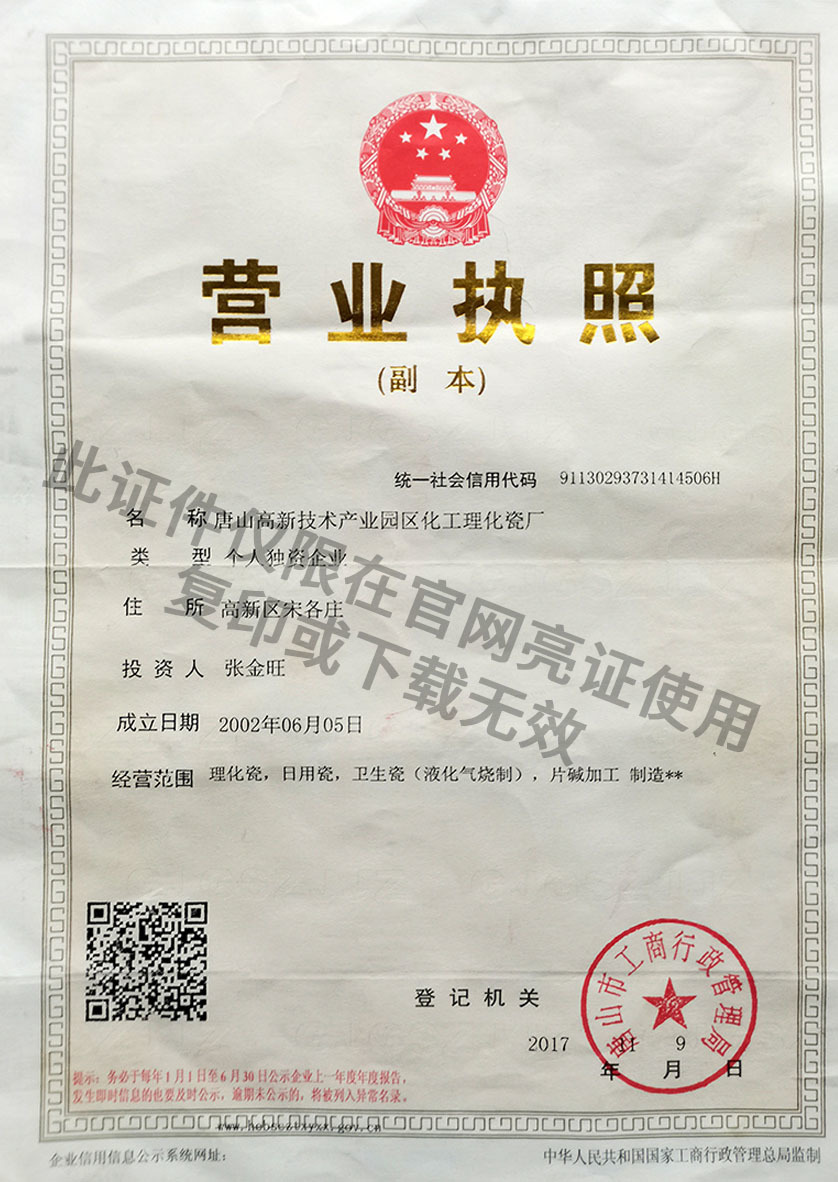
Tangshan High-tech Industrial Park Chemical Physical and Chemical Porcelain Factory
Tangshan Physical and Chemical Ceramics Co., Ltd.
Address: Songgezhuang Chemical and Physical Porcelain Factory, Tangshan High-tech Industrial Development Zone
Telephone: +86-315-5509570 、 +86-315-5509222
Mobile: +86-13903372399 、+86-13832559317
Email: tshglhcc@163.com


Product Center
Follow Us

Online Consultation
If you have any needs, please leave a message, and we will contact you as soon as possible.