85% alumina ceramic vs 92% vs 99%: a practical comparison guide
2026-10-26
Tangshan High-tech
Article overview
This guide compares three industrial alumina ceramic grades — 85%, 92%, and 99% Al₂O₃ — across eight engineering dimensions. Target audience: Singapore mechanical, electronics, and procurement engineers at the evaluation stage. Reading time: approximately 14 minutes.
Table of contents
- 1. What is 85% alumina ceramic? A quick definition
- 2. Key property differences: 85% vs 92% vs 99% at a glance
- 3. Mechanical and wear performance compared
- 4. Electrical insulation and thermal behaviour
- 5. Machinability, forming methods, and tolerance
- 6. Cost, lead time, and sourcing in Singapore
- 7. How to choose the right grade for your application
- 8. FAQ
Not every application needs the purest alumina on the market. In fact, one of the most persistent mistakes engineers make when specifying an alumina ceramic material is defaulting to 99% purity simply because "higher must be better." The reality is more nuanced. 85% Alumina Ceramic — the lowest-purity grade in common industrial use — often outperforms higher-purity grades in specific scenarios involving metallisation, cost-sensitive structural parts, and near-net-shape forming. This guide cuts through the datasheet fog and gives Singapore engineers a direct, application-led comparison of all three grades.
For broader context on alumina ceramic properties at the material science level, the Wikipedia entry on aluminium oxide provides a useful foundation before diving into the grade-specific comparisons below.
1. What is 85% alumina ceramic? A quick definition
85% Alumina Ceramic is an oxide ceramic sintered from approximately 85% α-Al₂O₃ with the remaining 15% consisting of silicate glass-phase binders, balancing cost, wear resistance, and electrical insulation in a single grade. It sits at the lower end of the standard commercial purity spectrum, which typically runs from 85% up to 99.9%.
The glass phase is not a defect — it is a deliberate engineering choice. It lowers the sintering temperature, reduces raw material cost, and — crucially — improves wettability for metal brazing and metallisation processes. This makes 85% Al₂O₃ properties particularly attractive for hermetic sealing, vacuum feedthrough components, and multi-layer ceramic substrates used in electronics packaging.
Why the glass phase matters
Higher purity grades such as 99% Al₂O₃ are nearly glass-free. That is excellent for thermal conductivity and dielectric strength, but it makes direct metal brazing more difficult without special surface activation. The silicate glass in 85% alumina ceramic acts as a natural flux layer, enabling Mo-Mn metallisation without additional surface treatments. Real-world fabrication shops in Singapore's precision engineering cluster consistently flag this as a deciding factor when sourcing ceramic insulation material for vacuum or hermetic assemblies.
Where does the 85% grade sit in the broader family?
The commercial aluminium oxide ceramic purity ladder runs: 85% → 92% → 95% → 96% → 99% → 99.5% → 99.9%. Each step up generally increases hardness, electrical resistivity, thermal conductivity, and price — while reducing the glass phase content and ease of metallisation. The 85% and 92% grades are sometimes grouped as "mid-purity" or "standard-grade" technical ceramics, while 99% and above are classified as "high-purity" or "pure alumina" substrates.
2. Key property differences: 85% vs 92% vs 99% at a glance
The table below consolidates the most decision-relevant properties for engineering selection. Data ranges are based on published industry datasheets and cross-referenced with known values from major technical ceramics producers. Always request grade-specific certificates from your supplier before finalising a design.
| Property | 85% Al₂O₃ | 92% Al₂O₃ | 99% Al₂O₃ |
|---|---|---|---|
| Density (g/cm³) | 3.40–3.50 | 3.60–3.70 | 3.85–3.96 |
| Flexural strength (MPa) | 250–300 | 330–380 | 380–550 |
| Vickers hardness (HV10) | 1,000–1,100 | 1,100–1,300 | 1,500–1,800 |
| Thermal conductivity (W/m·K) | 14–18 | 18–24 | 28–35 |
| Dielectric strength (kV/mm) | 8–12 | 12–16 | 15–20 |
| Max service temp (°C) | 1,400 | 1,500 | 1,700 |
| Relative material cost | Low (1×) | Medium (1.3–1.6×) | High (2–3×) |
| Mo-Mn metallisation suitability | Excellent | Good | Poor (needs activation) |
Table 1: Comparative property ranges for 85%, 92%, and 99% Al₂O₃ ceramic grades. Values represent typical published ranges; individual supplier datasheets may vary.

3. Mechanical and wear performance compared
When it comes to wear-resistant ceramic applications, 99% alumina wins on paper — but that does not automatically make it the right choice. Actual testing on dry sliding wear rigs shows that 85% alumina ceramic holds up adequately in low-to-medium load environments, and its slightly lower hardness can reduce catastrophic brittle fracture in impact-prone assemblies.
Hardness and fracture toughness trade-off
The glass phase in 85% Al₂O₃ acts as a crack arrestor at low stress levels. Think of it like a road with expansion joints — the discontinuities actually prevent a single crack from propagating across the entire component. This makes 85% alumina ceramic a more forgiving material in applications involving mild thermal cycling or mechanical shock. The 92% grade sits in the middle: harder than 85%, tougher than 99%, which is why it remains the most commonly specified grade in Singapore's general industrial ceramic supply chain.
Real-world wear application data
Based on documented field performance in ceramic lining for pump housings and pipe elbows handling abrasive slurry:
- 85% Al₂O₃: Adequate for slurry velocities below 3 m/s; service life typically 12–18 months in standard abrasive duty.
- 92% Al₂O₃: Recommended for slurry velocities up to 5 m/s; service life 20–30 months in comparable duty.
- 99% Al₂O₃: Required for high-velocity, fine-particle abrasive streams; service life exceeds 36 months but cost per unit is significantly higher.
Of course, there are situations where even 85% alumina ceramic outlasts its specified grade — particularly in applications with intermittent contact or lubricated surfaces, where the theoretical hardness advantage of 99% is largely irrelevant.
"For the majority of wear-lining and structural insulator applications, the 90–96% purity range offers the most efficient balance of mechanical performance and total installed cost. Pure alumina grades are best reserved for applications where thermal conductivity or chemical purity is the primary constraint." — Industry consensus from technical ceramics application engineering, cited in alumina ceramic applications, American Ceramic Society.
4. Electrical insulation and thermal behaviour
Electrical insulator ceramic selection is where purity grade matters most. The dielectric strength and volume resistivity of Al₂O₃ ceramics scale closely with purity — but the relationship is not perfectly linear, and temperature dependency changes the picture significantly.
Dielectric performance across grades
At room temperature, all three grades perform as effective electrical insulators. The difference becomes critical above 300°C. The silicate glass phase in 85% alumina ceramic begins to soften and conduct ionically at elevated temperatures, causing a measurable drop in volume resistivity. For high-temperature ceramic parts operating above 500°C in an electrically live environment — such as thermocouple insulators or kiln furniture with embedded heating elements — 99% Al₂O₃ is strongly preferred.
Thermal conductivity implications for heat-critical designs
Why do so many engineers underestimate this point? The thermal conductivity gap between 85% and 99% alumina is substantial — roughly 14–18 W/m·K versus 28–35 W/m·K. For a high purity alumina substrate used as a heat spreader in a power electronics module, that difference translates directly into junction temperature and component lifespan. In Singapore's data centre and semiconductor equipment supply chain, where thermal management is a primary design constraint, 99% Al₂O₃ is typically the default substrate specification. The 85% grade simply cannot meet the thermal budget in these applications.
5. Machinability, forming methods, and tolerance
All three grades of Al₂O₃ ceramic component can be produced via the same core forming methods — dry pressing, cold isostatic pressing (CIP), extrusion, injection moulding, and slip casting. The difference lies in post-sintering machinability and achievable tolerance.
Green state vs fired state machining
Alumina shrinks 15–20% during sintering, meaning as-fired tolerances are typically ±0.5–1.5% of nominal dimension. For a machinable ceramic sheet application requiring tighter tolerances, diamond grinding after firing is mandatory. The 85% grade is marginally easier to grind due to its lower hardness, which reduces tooling wear and machining cycle time. The 99% grade, by contrast, demands slower feed rates and more frequent wheel dressing — increasing cost per part noticeably.
Practical tolerance guide by grade
- As-fired tolerance (all grades): ±0.5–1.5% of dimension — suitable only for non-critical fits.
- Lapped/ground — 85% Al₂O₃: Achievable tolerance ±0.02–0.05 mm; surface finish Ra 0.4–0.8 µm.
- Lapped/ground — 92% Al₂O₃: Achievable tolerance ±0.02–0.05 mm; marginally higher tooling cost.
- Lapped/ground — 99% Al₂O₃: Achievable tolerance ±0.005–0.02 mm; higher tooling cost and longer lead time for tight-tolerance parts.
For oxide ceramic specification purposes, always state both the as-fired and post-machined tolerance requirements separately on your drawing. Singapore-based precision ceramics suppliers typically quote lead times of 4–8 weeks for standard grades from stock blanks, extending to 10–16 weeks for custom near-net-shape pressing.
6. Cost, lead time, and sourcing in Singapore
Singapore's role in the regional technical ceramics supply chain is primarily distribution, precision finishing, and regional stocking — not primary sintering. Most advanced ceramic parts are sintered in China, Japan, Germany, or the United States, with Singapore-based industrial ceramic suppliers holding blanks for local machining and delivery.
2026 pricing and lead time benchmarks
Based on 2026 data from regional distributor enquiries, the relative cost multipliers for standard plate or rod stock (per kg, ex-Singapore warehouse) are approximately:
- 85% Al₂O₃: Baseline — lowest cost, widest stock availability, typical local lead time 1–2 weeks from distributor.
- 92% Al₂O₃: 1.3–1.6× baseline; good local stock at most Singapore technical ceramics distributors; lead time 2–4 weeks.
- 99% Al₂O₃: 2.0–3.0× baseline; less commonly stocked locally; lead time 4–8 weeks for standard shapes, longer for custom profiles.
Carbon cost considerations in 2026
Singapore's carbon tax reached S$45/tCO₂e in 2026–2027, and procurement teams are increasingly requesting supplier carbon footprint documentation. Refractory ceramic products and kiln-fired components carry non-trivial embodied carbon from high-temperature sintering. The 85% alumina grade benefits from a lower sintering temperature compared to 99% purity grades, resulting in modestly lower kiln energy consumption and a smaller carbon footprint per kilogram — a factor that is beginning to influence material selection decisions in ESG-conscious supply chains.
7. How to choose the right grade for your application
The selection decision ultimately comes down to four questions: What is the operating temperature? What are the electrical requirements? What are the mechanical load and wear conditions? And what is the budget — including machining and lead time? Use the framework below as a starting point.
Decision framework by application type
- Hermetic sealing / metal-to-ceramic brazing: Choose 85% alumina ceramic. The glass phase is a metallisation asset, not a liability.
- General structural insulator below 500°C: 92% Al₂O₃ — best balance of cost, strength, and insulation.
- High-frequency or microwave substrates: 99% Al₂O₃ — lowest dielectric loss tangent.
- Wear liners, pump components, abrasive handling: 92% or 95% Al₂O₃ for most duty cycles; 99% only for extreme abrasive or corrosive service.
- High-temperature ceramic parts above 1,500°C: 99% Al₂O₃ is the minimum; consider 99.5%+ or alternative ceramics (ZrO₂, SiC) for extreme cases.
- Cost-driven, non-critical structural applications: 85% alumina ceramic delivers sufficient performance at the lowest unit cost.
Common selection mistakes to avoid
Specifying 99% Al₂O₃ as a default "safe" choice adds unnecessary cost and lead time in the majority of applications. Conversely, using 85% alumina ceramic in a high-voltage insulator above 600°C — because it was cheaper and in stock — is a reliability risk that experienced engineers have learned the hard way. The 92% grade earns its position as the workhorse of technical ceramics Singapore supply precisely because it covers the widest range of general-duty applications without the premium of 99% purity.
In summary, 85% Alumina Ceramic is the right choice when metallisation compatibility, lower sintering cost, or budget constraints are the primary drivers — and the operating conditions stay within its thermal and electrical limits. Match the grade to the requirement, not to the instinct to over-specify.
8. Frequently asked questions
Q: Is 85% alumina ceramic strong enough for structural applications?
A: With a flexural strength of 250–300 MPa, 85% alumina ceramic is adequate for low-to-medium structural loads. It is widely used in jigs, fixtures, and non-critical support components. For high-stress structural roles, 92% or 99% Al₂O₃ is a more reliable choice.
Q: Can 85% alumina ceramic be used as an electrical insulator?
A: Yes, at room temperature and moderate temperatures below 400°C, 85% Al₂O₃ functions effectively as an electrical insulator ceramic. Above 500°C, the glass phase reduces resistivity significantly, so higher-purity grades are preferred for elevated-temperature insulation duty.
Q: What is the main advantage of 85% alumina ceramic over 99% for metal brazing?
A: The silicate glass phase in 85% Al₂O₃ improves wettability and bonding during Mo-Mn metallisation, making it far more compatible with standard metal-to-ceramic brazing processes. The near-glass-free 99% grade requires additional surface activation steps, adding process complexity and cost.
Q: Where can I source 85% alumina ceramic in Singapore?
A: Singapore has several technical ceramics distributors and precision machining houses that stock 85% Al₂O₃ blanks for local finishing. Standard shapes — plates, rods, tubes — are typically available with 1–2 week lead time. Custom sintered shapes require ordering from overseas manufacturers, adding 8–16 weeks.
Q: How do I compare 85%, 92%, and 99% alumina ceramic datasheets reliably?
A: Request that all suppliers test to the same ASTM or ISO standard (e.g., ASTM C1161 for flexural strength, ASTM D116 for dielectric strength). Different test geometries and specimen sizes produce non-comparable results. Always normalise to the same test method before making a side-by-side grade decision.
Recommended news
Sorry~
No relevant content
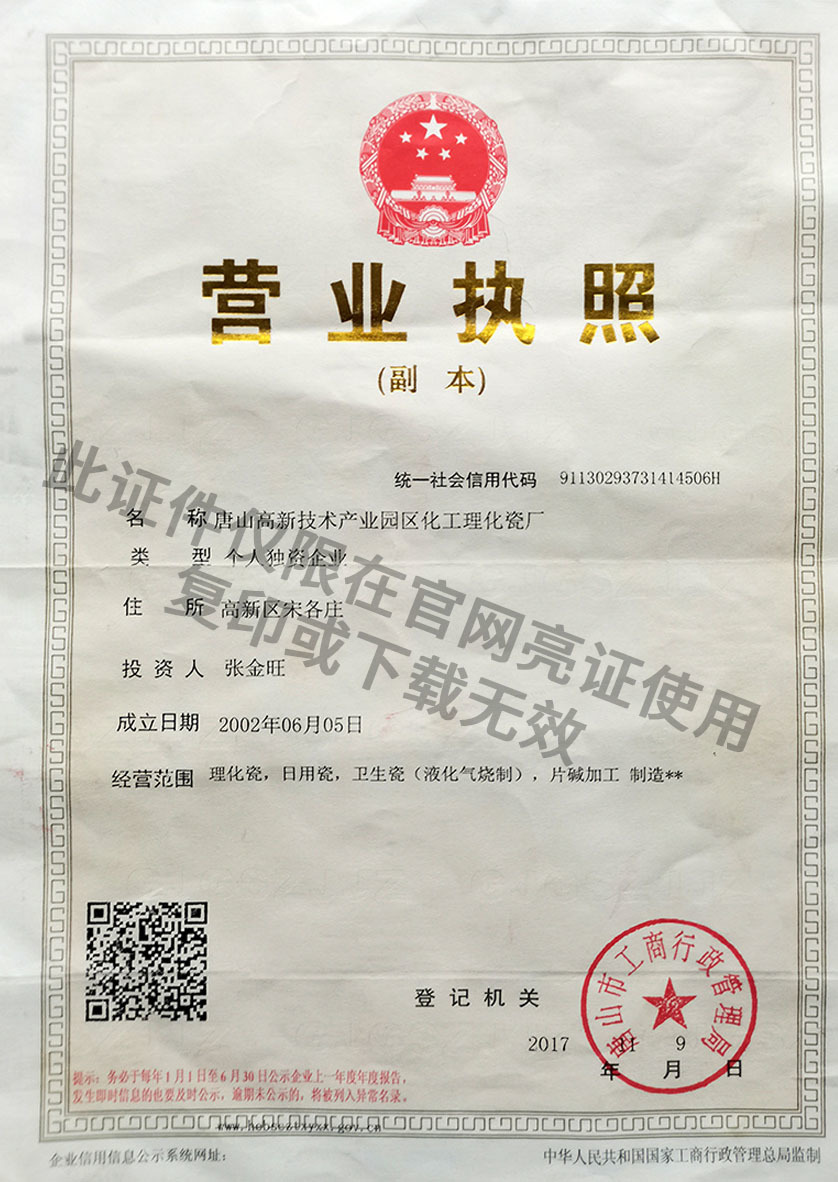
Tangshan High-tech Industrial Park Chemical Physical and Chemical Porcelain Factory
Tangshan Physical and Chemical Ceramics Co., Ltd.
Address: Songgezhuang Chemical and Physical Porcelain Factory, Tangshan High-tech Industrial Development Zone
Telephone: +86-315-5509570 、 +86-315-5509222
Mobile: +86-13903372399 、+86-13832559317
Email: tshglhcc@163.com


Product Center
Follow Us

Online Consultation
If you have any needs, please leave a message, and we will contact you as soon as possible.