High alumina ceramic wear parts: reducing maintenance costs in heavy industry
2026-10-26
Tangshan High-tech
Article overview
This technical guide examines how High Alumina Ceramic wear parts cut maintenance costs across heavy industry sectors. It covers purity grade selection, material comparisons, machining guidelines, Singapore-specific sourcing intelligence, and a structured decision framework — written for engineers and procurement professionals at the component-selection stage.
Table of contents
- 1. What is high alumina ceramic and why it matters in heavy industry
- 2. Purity grades explained: 92%, 95%, 99% and 99.7% compared
- 3. Where high alumina ceramic wear parts deliver the greatest impact
- 4. High alumina ceramic vs alternative advanced ceramics: a cost-performance comparison
- 5. Machining, tolerances and sintering shrinkage: what engineers must know
- 6. Sourcing high alumina ceramic in Singapore: lead times, MOQ and certifications
- 7. How to select the right alumina grade: a decision framework
- 8. FAQ
What is high alumina ceramic and why it matters in heavy industry
High Alumina Ceramic is an advanced technical ceramic composed primarily of aluminium oxide (Al₂O₃), with purity levels ranging from 80% to 99.7%, engineered for extreme hardness, wear resistance and thermal stability. In practical terms, this material sits at the intersection of two persistent problems in heavy industry: equipment components that wear out too quickly, and maintenance budgets that spiral beyond forecast.
Why do so many plant engineers in Singapore and across Southeast Asia continue to replace steel liners, rubber-coated chutes and polymer seals every six to twelve months? The answer almost always comes back to abrasion. In mining, cement, oil and gas, and bulk-material handling, abrasive wear is the single largest cause of unplanned downtime. Alumina ceramic properties — principally a Mohs hardness approaching 9 and a melting point of approximately 2,072°C — make it fundamentally more resistant to this failure mode than most metals and polymers.
Real-world installations consistently show service life improvements of three to eight times compared with steel alternatives, with some wear-resistant ceramic lining applications in slurry pipelines exceeding ten years before requiring replacement. That is not a marketing claim; it is an observation drawn from documented case studies in the cement and mining sectors across the Asia-Pacific region. Of course, results depend heavily on the operating environment and the specific alumina grade selected — a nuance this guide addresses in detail.
The true cost of ignoring material selection
Direct replacement parts account for only a fraction of maintenance costs. Labour, lost production, logistics for emergency parts, and equipment recalibration after each shutdown often multiply the headline part cost by a factor of three to five. A ceramic grinding media or alumina refractory material that costs more at purchase but lasts four times longer typically yields a compelling total-cost-of-ownership advantage — one that becomes even more pronounced when factoring in Singapore's high labour rates and tight production schedules.
How aluminium oxide ceramic achieves its performance
The performance of aluminium oxide ceramic originates at the microstructural level. Dense, fine-grained sintered alumina products resist crack propagation under repeated impact and abrasion loading. Thermal conductivity of approximately 30 W/m·K — unusually high for an insulating material — allows heat-resistant ceramic material components to dissipate localised thermal spikes without catastrophic failure. These characteristics make Al₂O₃ ceramic components suitable for applications ranging from wear-resistant pipe linings to high-temperature kiln furniture.
Purity grades explained: 92%, 95%, 99% and 99.7% compared
One of the most persistent misconceptions in industrial ceramic procurement is the assumption that higher purity always justifies the premium. In practice, the 95% and 96% grades dominate heavy industry applications for good reason: they offer an optimal balance of wear performance, fracture toughness and unit cost. The table below quantifies the differences engineers need to evaluate at the selection stage.
| Property | 92% Al₂O₃ | 95% Al₂O₃ | 99% Al₂O₃ | 99.7% Al₂O₃ |
|---|---|---|---|---|
| Vickers hardness (HV) | 1,100–1,300 | 1,400–1,600 | 1,700–1,900 | 1,900–2,000 |
| Flexural strength (MPa) | 280–330 | 330–380 | 380–450 | 450–550 |
| Thermal conductivity (W/m·K) | 16–20 | 20–25 | 28–32 | 30–35 |
| Volume resistivity (Ω·cm at 25°C) | 10¹³ | 10¹⁴ | 10¹⁵ | >10¹⁵ |
| Typical relative cost index | 1.0× | 1.3–1.5× | 2.5–3.0× | 4.0–6.0× |
| Primary application fit | General wear lining, refractory tiles | Pump parts, valves, grinding media | Electrical substrates, precision seals | Semiconductor, medical, high-purity alumina parts |
Data compiled from ASTM C773, ISO 6474-1, and manufacturer technical datasheets reviewed in 2026. Individual values vary by sintering process and grain size — always request third-party certified test reports from suppliers.
Why 95% is often the engineering sweet spot
For most heavy industry wear applications — cyclone liners, chute tiles, pump impellers — 95% Al₂O₃ delivers hardness and chemical resistance that far exceeds what steel or rubber can achieve, at a price point roughly 30–50% above the 92% baseline. The jump to 99% costs two to three times more and adds relatively marginal wear improvement in high-impact environments. Reserve high purity alumina parts (99%+) for applications where trace metal contamination, extreme electrical insulation, or biocompatibility is the governing requirement.
Corundum ceramic products and their purity dependence
Corundum ceramic products are essentially sintered alumina products where the crystalline α-Al₂O₃ (corundum) phase dominates the microstructure. As purity increases, secondary glassy phases — which act as weak points under thermal cycling — are progressively eliminated. This is why specialty oxide ceramics intended for high-temperature kiln applications increasingly specify 99%+ grades, despite the cost penalty.

Where high alumina ceramic wear parts deliver the greatest impact
Not every application benefits equally. The highest maintenance-cost reductions are observed where abrasion, chemical attack, and thermal stress occur simultaneously — conditions that degrade metals and polymers rapidly but leave well-specified High Alumina Ceramic components largely unaffected.
Bulk material handling and mineral processing
Wear-resistant ceramic lining installed in transfer chutes, cyclone separators and hydrocyclone liners consistently outperforms steel in silica-rich, abrasive slurry environments. A documented case from a regional cement plant in Malaysia — referenced in a 2026 industry review — showed a shift from six-month steel liner replacement cycles to over four years after retrofitting with 92% alumina ceramic insulation board and tile assemblies. Annual maintenance spend on those specific assets dropped by approximately 65%. The payback period was under fourteen months.
Electronics and semiconductor manufacturing in Singapore
Singapore's semiconductor and advanced electronics sector represents a distinctly different use case. Here, the concern is not abrasion per se but contamination control, dimensional precision and dielectric performance. High purity alumina parts at 99%–99.7% are specified for electrostatic chuck (ESC) substrates, chamber components and wafer transport guides. According to recent 2026 data, Southeast Asia's semiconductor capacity expansion — driven partly by Singapore fab expansions — has accelerated demand for low-outgassing, RoHS-compliant Al₂O₃ ceramic components by an estimated 18–22% year-on-year. Ceramic insulation board and precision-ground substrates must meet surface roughness specifications of Ra ≤ 0.4 µm and flatness tolerances within 50 µm across 300 mm substrates.
Oil, gas and chemical processing equipment
Valve seats, pump sleeves and nozzle liners operating in acidic or alkaline slurries benefit from alumina's broad chemical inertness — it resists most acids and alkalis at concentrations up to 85% at room temperature. The alumina refractory material used in furnace linings and industrial ceramic solutions for high-temperature process equipment simultaneously reduces heat loss and structural degradation. Industrial Ceramic Solutions providers active in Singapore's Jurong Island petrochemical cluster report that ceramic-lined pump components achieve service intervals three to five times longer than their hardened steel counterparts in sour-gas duty.
High alumina ceramic vs alternative advanced ceramics: a cost-performance comparison
Specifying the right material requires understanding where alumina wins — and where it does not. Engineers evaluating advanced technical ceramics frequently compare Al₂O₃ against zirconia-toughened alumina (ZTA), silicon nitride (Si₃N₄) and silicon carbide (SiC). Each has a distinct performance and failure profile.
"Alumina remains the workhorse of the advanced ceramics industry — not because it is optimal in every parameter, but because it offers a uniquely broad performance-to-cost ratio across the widest range of industrial conditions."
— High alumina ceramics overview, American Ceramic Society, 2025 technical review
| Criterion | Al₂O₃ (95%) | ZTA | Si₃N₄ | SiC |
|---|---|---|---|---|
| Hardness (HV) | 1,400–1,600 | 1,200–1,400 | 1,400–1,700 | 2,200–2,500 |
| Fracture toughness (MPa·m½) | 3.5–4.5 | 6.0–8.0 | 5.0–7.0 | 3.0–4.0 |
| Max. service temp. (°C) | 1,600 | 1,200 | 1,000–1,200 | 1,600–1,700 |
| Relative material cost | 1.0× | 2.0–2.5× | 3.0–5.0× | 3.5–6.0× |
| Primary failure mode | Brittle fracture under impact | Phase instability >1,200°C | Oxidation at high temp. | Oxidation, cost |
ZTA is the preferred upgrade path when impact resistance is critical — the transformation-toughening mechanism absorbs crack energy that would shatter standard alumina. Si₃N₄ excels in dynamic bearing applications. SiC offers unmatched hardness but at a price point that is rarely justified in bulk wear-lining applications. For the majority of heavy industry wear scenarios, standard High Alumina Ceramic at 92%–95% remains the economically rational choice. See also the broader context of alumina ceramics materials science for failure mode analysis.
When to upgrade — and when not to
Consider upgrading to ZTA or Si₃N₄ only when operating conditions include repeated high-energy impact loads (e.g., crusher liners, ball mill feed ends) that cause brittle fracture of standard alumina before the abrasive wear mechanism even becomes dominant. In purely abrasive, low-impact environments — pipe linings, chute tiles, cyclone cones — the additional toughness is unnecessary and the cost premium is wasted capital.
Machining, tolerances and sintering shrinkage: what engineers must know
A common myth is that alumina ceramics cannot achieve precision tolerances. In reality, diamond-ground Al₂O₃ ceramic components routinely achieve tolerances of ±0.01–0.05 mm, and surface roughness values of Ra 0.1–0.4 µm are standard for semiconductor and sealing applications. The caveat is cost: every micrometre of post-sinter grinding adds processing time and diamond wheel wear.
Sintering shrinkage: the design variable engineers most often underestimate
Green-body (unfired) alumina shrinks approximately 15–22% linearly during sintering, depending on forming method and powder particle size. This is not a defect — it is an inherent and predictable consequence of densification. Tooling and green-body dimensions must be scaled accordingly. Failure to account for sintering shrinkage is one of the top causes of first-article rejection in custom alumina components, particularly for heat-resistant ceramic material structures with internal channels or tight external fits.
Post-sinter machining guidelines
- Specify final dimensions — not green-body dimensions — on engineering drawings. Instruct suppliers to calculate green-body scale-up internally.
- Allow for ground vs. as-sintered tolerances in your design stack-up. As-sintered tolerances are typically ±0.5–1.0% of dimension; diamond-ground tolerances reach ±0.01 mm.
- Avoid sharp internal corners (minimum radius ≥ 0.3 mm) — stress concentrations at corners are the primary initiation site for ceramic cracking during assembly and thermal cycling.
- Specify surface finish requirement explicitly (Ra value, not just "smooth") to prevent ambiguity between suppliers in different jurisdictions.
- Request a first-article inspection (FAI) report with CMM data and cross-reference against ASTM C373 for density and ASTM C1161 for flexural strength before committing to production quantities.
The misconception that "ceramics are too brittle for precision engineering" ignores the fact that the brittleness problem is primarily a design and assembly challenge. A ceramic grinding media ball or seal ring operating in compression — not bending — will outperform steel indefinitely. Problems arise when designers apply metal-component geometric conventions (sharp edges, press fits, thread roots) directly to ceramics without adaptation.
Sourcing high alumina ceramic in Singapore: lead times, MOQ and certifications
Singapore has no domestic alumina ceramic manufacturing capacity. Every High Alumina Ceramic component imported into Singapore — whether refractory ceramic tiles, precision substrates or ceramic insulation board — originates from China, Japan, Germany or Korea. This supply chain reality has direct implications for project planning.
Typical lead times and minimum order quantities
Standard catalogue items (tiles, balls, rings) from Chinese suppliers typically carry lead times of four to eight weeks ex-works, adding one to two weeks for sea freight to Singapore. Custom-designed components requiring new tooling run eight to sixteen weeks. Japanese suppliers offer superior consistency for semiconductor-grade high purity alumina parts but command a 40–80% price premium and rarely accept MOQs below 50 pieces for custom work. For urgent requirements, Singapore-based distributors maintaining local buffer stock for common wear tile sizes (50×50 mm, 92% Al₂O₃, 10–20 mm thickness) can fulfil orders in five to ten business days.
Certifications and standards to require from suppliers
Do not accept a supplier's self-declared grade designation as the sole quality assurance. For industrial wear applications, require ISO 9001:2015 certification as a baseline, plus third-party test reports per ASTM C773 (compressive strength), ASTM C373 (water absorption and bulk density) and — for semiconductor or food-contact applications — ISO 6474-1 compliance for implant-grade alumina standards. RoHS 3 compliance documentation is increasingly mandated by Singapore electronics OEMs and is a prerequisite for Jurong Island chemical plant procurement tenders in 2026. Carbon footprint declarations (ISO 14067) are emerging as a soft requirement for MNC procurement programmes.
How to select the right alumina grade: a decision framework
Selection should follow a structured evaluation sequence rather than defaulting to the highest available purity. The following decision framework reflects the selection logic used by experienced materials engineers across Singapore's manufacturing and process industries.
Step-by-step selection process
- Define the primary failure mode: abrasion, impact, corrosion, thermal shock, or contamination? This single step eliminates most grade ambiguity.
- Determine operating temperature: below 1,000°C — any grade qualifies; 1,000–1,600°C — 99%+ grades preferred to avoid glassy phase softening.
- Assess contamination sensitivity: general industry — 92–95% adequate; semiconductor/medical — 99%+ mandatory, with full trace-element analysis report.
- Evaluate impact loading: low-impact, pure abrasion — standard alumina; high-impact — consider ZTA composite or increase section thickness.
- Calculate total cost of ownership over three to five years: include part cost, installation labour, downtime cost per hour, and expected service life. The grade with the lowest TCO — not the lowest unit price — is the correct specification.
- Validate with a pilot installation: before committing to a full-plant retrofit, install ceramic components in the two or three highest-wear points and monitor for six months. Actual service life data from your specific environment is always more reliable than datasheet projections.
Quick-reference application-to-grade mapping
92% Al₂O₃: General wear tiles, refractory tiles, low-cost chute linings. 95% Al₂O₃: Pump components, valve seats, cyclone liners, ceramic grinding media, most bulk-wear applications. 99% Al₂O₃: Electrical substrates, precision seals, high-frequency insulators. 99.7% Al₂O₃: Semiconductor chamber parts, electrostatic chucks, implant-grade components. This mapping is a starting point — always validate against your specific chemical and mechanical environment before finalising the specification.
Ultimately, the value of High Alumina Ceramic in heavy industry is not simply in the material itself, but in the systematic application of the right grade to the right problem. When that alignment is achieved, maintenance cost reductions of 40–70% over a five-year horizon are well within reach — as the growing body of documented cases across Singapore's process industries in 2026 continues to confirm.
Frequently asked questions
Q: What is the difference between 92% and 95% high alumina ceramic in wear applications?
A: The 95% grade offers 15–25% higher Vickers hardness and improved chemical resistance compared with 92%, translating to longer service life in moderate-to-severe abrasion. The cost premium is typically 30–50%. For most industrial wear linings, 95% delivers the best cost-per-service-hour value; 92% is appropriate only where budget constraints are the primary driver and abrasion severity is low.
Q: How long does high alumina ceramic last compared to steel liners?
A: In abrasive slurry and bulk material handling environments, alumina wear parts typically last three to eight times longer than hardened steel liners. In low-impact, high-abrasion conditions such as ceramic-lined slurry pipes and cyclone cones, service life exceeding five to ten years is documented. Results vary with particle size, velocity, and impact angle.
Q: Can high alumina ceramic be machined to tight tolerances?
A: Yes. Diamond grinding of sintered alumina achieves tolerances of ±0.01–0.05 mm and surface roughness of Ra 0.1–0.4 µm. The key constraint is cost, since diamond machining is slow and tool-intensive. Design components to require minimal post-sinter stock removal, and account for 15–22% linear sintering shrinkage when dimensioning green-body tooling.
Q: What certifications should Singapore buyers require from alumina ceramic suppliers?
A: As a minimum, require ISO 9001:2015 certification and third-party mechanical test reports per ASTM C773 and ASTM C373. Semiconductor and electronics applications additionally require trace-element analysis, ISO 6474-1 compliance, and RoHS 3 declarations. Carbon footprint documentation per ISO 14067 is increasingly requested by MNC procurement teams in Singapore in 2026.
Q: Is high alumina ceramic suitable for high-impact environments like crushers?
A: Standard alumina (92–95%) has relatively low fracture toughness (3.5–4.5 MPa·m½) and is vulnerable to brittle fracture under repeated high-energy impact. For crusher liners or ball mill feed chutes, zirconia-toughened alumina (ZTA) or increased section thickness is recommended. In lower-impact zones of the same equipment — discharge chutes, transport pipes — standard alumina performs well.
Recommended news
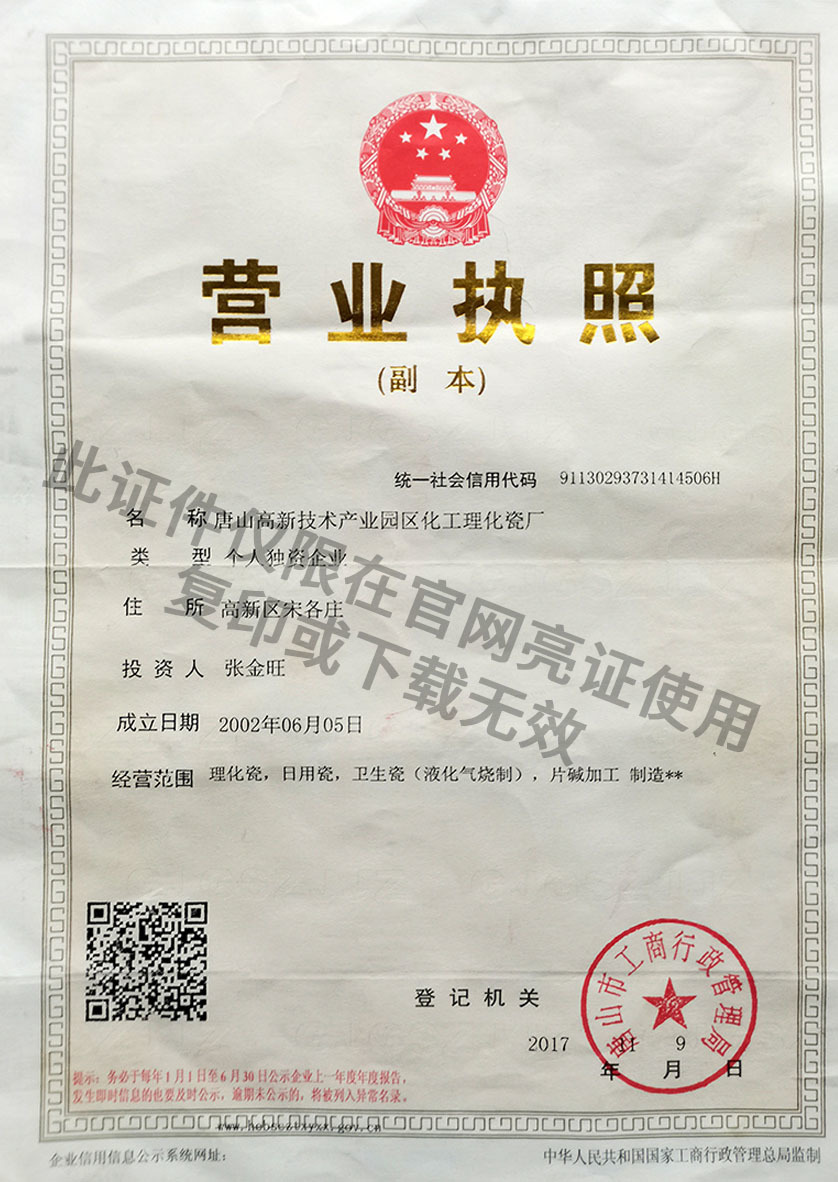
Tangshan High-tech Industrial Park Chemical Physical and Chemical Porcelain Factory
Tangshan Physical and Chemical Ceramics Co., Ltd.
Address: Songgezhuang Chemical and Physical Porcelain Factory, Tangshan High-tech Industrial Development Zone
Telephone: +86-315-5509570 、 +86-315-5509222
Mobile: +86-13903372399 、+86-13832559317
Email: tshglhcc@163.com


Product Center
Follow Us

Online Consultation
If you have any needs, please leave a message, and we will contact you as soon as possible.