Main characteristics and cleaning methods of corundum crucibles
2022-04-03
Main characteristics and cleaning methods of corundum crucibles
Speaking of crucibles, I wonder how many people know about them. In fact, crucibles are an important part of chemical instruments. They are containers for melting and refining metal liquids, heating and reacting solids and liquids, and are the basis for ensuring the smooth progress of chemical reactions. However, there are many types of crucibles, including iron crucibles, corundum crucibles, graphite crucibles, and corundum crucibles. In fact, what I'm talking about today is the corundum crucible.
I. Characteristics
1. Crucibles with an alumina content exceeding 95% are called corundum crucibles.
2. Corundum crucibles are made of porous electrofused alumina, with high strength and refractory properties.
3. Corundum crucibles are suitable for melting samples with some weakly alkaline substances such as anhydrous Na2CO3 as fluxes, but not for strongly alkaline substances such as Na2O2, NaOH and acidic substances (such as K2S2O7, etc.).
II. Indicators
Alumina crucibles, corundum crucibles, and non-expanding ceramic crucibles are China's first new generation of products following clay, cordierite, corundum, and coated crucibles. The non-expanding ceramic crucibles produced by Yixing Tengjun Refractory Ceramics have a service life and effect comparable to Corning imports from the United States, and are highly praised by users for their long life and low consumption. 1. This crucible has an ultra-low expansion coefficient and high thermal shock stability...
III. Cleaning methods
1. Acid soaking: Generally, it is soaked in nitric acid for a long time; rinse with water again.
2. Drying, slowly heating to 800℃ in a high-temperature furnace and maintaining for 6 hours.
3. After cooling, it can be used.
4. Removing impurities, converting insoluble substances into soluble nitrates and removing them.
5. Removing trace nitrates in the crucible (thermal decomposition method): Note that the heating rate must not be fast, otherwise the crucible will peel off (explosion damage).
The above is an introduction to the characteristics, indicators, and cleaning methods of corundum crucibles. I don't know how much you've learned. Actually, after reading this knowledge, you should have learned a lot, even those who didn't know before have learned a lot. In fact, the knowledge summarized by Bian Xiao hopes to be of great help to you.
What should be paid attention to when using corundum crucibles?
Corundum crucibles, iron crucibles, cast iron crucibles, corundum crucibles, porcelain crucibles, graphite crucibles, etc. are all types of crucibles. Crucibles are an important part of chemical instruments, and are containers for melting and heating solids, reacting and refining metal liquids, and are the basis of chemical instruments. What should be paid attention to when using crucibles? What should be paid attention to when using corundum crucibles?
①The crucible can be heated directly, but it cannot be quenched after heating.
②Do not touch the crucible with your hands; use crucible tongs.
③When heating a corundum crucible, place it on a clay triangle (a clay triangle is a tool made by twisting iron wire, with a porcelain tube outside). What should be paid attention to when using a corundum crucible?
④When using a corundum crucible to evaporate substances, stirring is required. When the evaporation is almost complete, use the residual heat to dry them and do not continue heating.
After use, be sure to clean up and place the corundum crucible in a dry place.
Recommended news
2026-05-23
2026-04-08
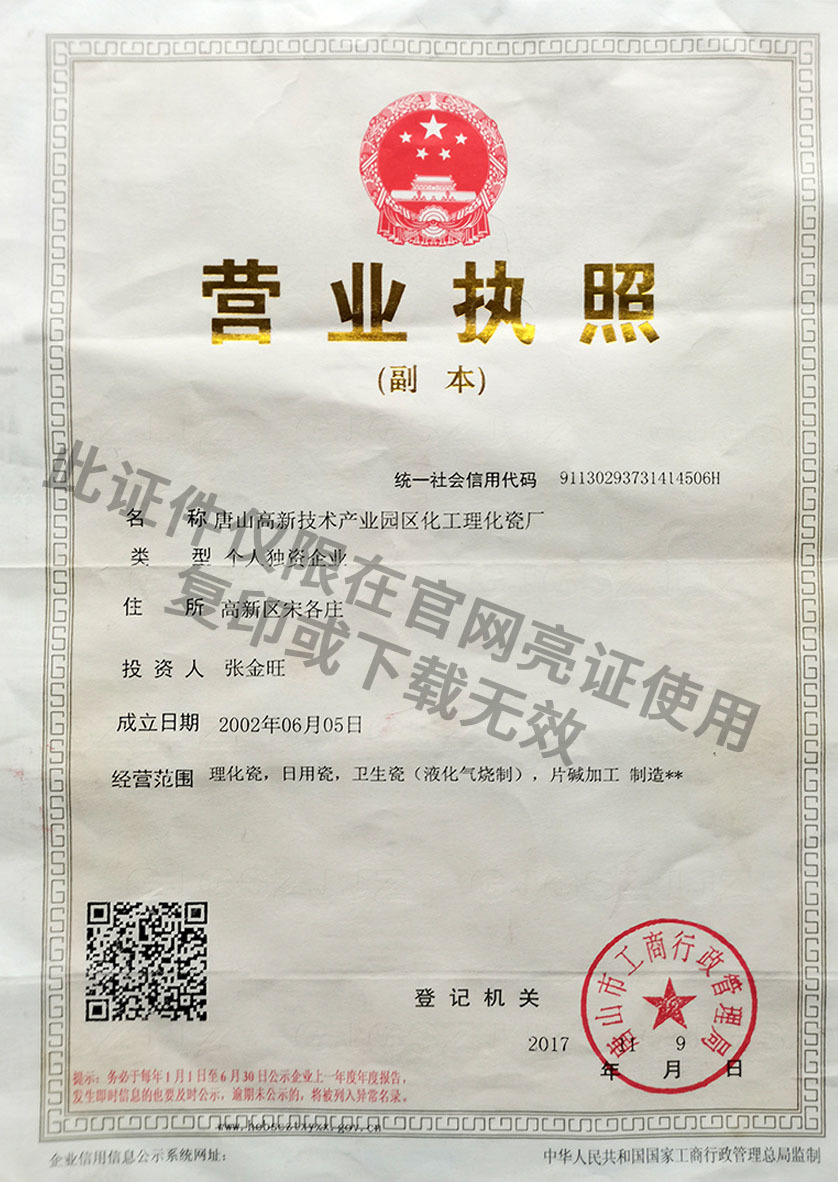
Tangshan High-tech Industrial Park Chemical Physical and Chemical Porcelain Factory
Tangshan Physical and Chemical Ceramics Co., Ltd.
Address: Songgezhuang Chemical and Physical Porcelain Factory, Tangshan High-tech Industrial Development Zone
Telephone: +86-315-5509570 、 +86-315-5509222
Mobile: +86-13903372399 、+86-13832559317
Email: tshglhcc@163.com


Product Center
Follow Us

Online Consultation
If you have any needs, please leave a message, and we will contact you as soon as possible.