How to choose the right alumina kiln roller for your ceramic production line
2026-11-17
Tangshan High-tech
Article overview
This guide helps ceramic production engineers and procurement managers in Singapore select the correct Alumina Kiln Roller by comparing Al₂O₃ grades, temperature ratings, dimensional standards, and regional sourcing options. It covers technical parameters, a graded comparison table, step-by-step selection logic, and answers to the most common buyer questions.
Table of contents
- 1. What is an alumina kiln roller and why does it matter
- 2. Understanding Al₂O₃ content grades: 75%, 95%, and 99%
- 3. Key technical parameters to evaluate before purchasing
- 4. How to match roller specifications to your kiln type
- 5. Common selection mistakes and how to avoid them
- 6. Sourcing and delivery considerations for Singapore buyers
- 7. Frequently asked questions
What is an alumina kiln roller and why does it matter
An Alumina Kiln Roller is a high-purity Al₂O₃ ceramic rod used inside roller kilns to rotate, support, and convey ceramic ware through firing zones at temperatures ranging from 1,000°C to over 1,700°C. Without it, consistent product transport through a tunnel or roller kiln is simply not possible. It is, in essence, the backbone of any continuous firing system.
The role sounds straightforward — a rotating rod that moves product from entry to exit. But the engineering demands placed on this component are severe. It must resist thermal shock when the kiln ramps through temperature cycles, maintain dimensional straightness under load, and survive chemical attack from glazes, fluxes, and combustion gases. A single warped or fractured roller can halt an entire production run.
In the context of kiln furniture and refractory rollers, the alumina roller occupies a top tier — it is not a commodity. According to 2026 market data, the Asia-Pacific region accounts for approximately 40.6% of the global advanced ceramics market, valued at around USD 119.4 billion, and demand for high-temperature conveyor rollers is accelerating alongside growth in tile, electronic ceramics, and lithium battery component manufacturing.
Why the selection decision carries long-term consequences
Underspecifying a roller — choosing a lower Al₂O₃ grade than your process demands — leads to premature sagging and fracture. Overspecifying drives unnecessary cost and, sometimes, brittleness where toughness is actually needed. Real production cases from ceramic tile plants in Southeast Asia consistently show that mismatched roller specification is responsible for more than 60% of unplanned kiln shutdowns related to roller failure, based on engineering reports reviewed in 2026.
Where alumina rollers sit in the kiln system
A standard tunnel kiln roller system comprises hundreds of rollers spanning the full kiln length, each driven by a motor-gear assembly — collectively referred to as the kiln drive roller assembly. Individual rollers are supported at each end by bearing housings outside the kiln walls, while the central span is entirely unsupported and exposed to peak firing temperatures. This unsupported span length is a critical design constraint that directly governs which roller diameter and grade you need.
Understanding Al₂O₃ content grades: 75%, 95%, and 99%
The single most important material variable in any Alumina Kiln Roller specification is alumina purity — expressed as the percentage of Al₂O₃ in the ceramic body. Higher purity generally means higher service temperature, greater chemical resistance, and better long-term dimensional stability. But it also means higher cost and, in some cases, reduced thermal shock resistance. The three commercially dominant grades are 75%, 95%, and 99%.
75% Al₂O₃ — the workhorse grade
Often referred to as a mullite kiln roller in composition, this grade contains a significant mullite (3Al₂O₃·2SiO₂) crystalline phase alongside alumina. It offers excellent thermal shock resistance — arguably the best of the three grades — because the mullite phase accommodates rapid temperature changes without cracking. Service temperature is typically capped at around 1,400°C. For ceramic tile firing and sanitaryware kilns operating below this threshold, 75% rollers deliver an outstanding balance of performance and cost. Their price point is roughly USD 6–8 per unit for standard dimensions.
95% Al₂O₃ — the industry mainstream for high-performance applications
This is the grade you encounter most frequently in modern high-temperature ceramic roller systems. The reduced silica content allows continuous operation up to approximately 1,600°C, and the denser microstructure significantly reduces creep under sustained mechanical load. Refractory kiln roller specifications for advanced technical ceramics, electronic substrate firing, and lithium battery electrode calcination consistently call for 95% purity. Typical pricing runs USD 8–11 per unit. The trade-off: thermal shock resistance is measurably lower than the 75% grade, so kiln heating and cooling rates must be managed carefully.
99% Al₂O₃ — ultra-high purity for extreme conditions
The alumina oxide roller bar at 99% purity is the premium tier, suited for applications above 1,650°C or where contamination of fired product from roller material is absolutely unacceptable — such as advanced piezoelectric ceramics or specialty optical components. The microstructure is nearly pure corundum. Thermal shock resistance is the lowest of the three grades, and these rollers demand very controlled thermal cycling. Cost premium over 95% grade is typically 30–50%.

| Al₂O₃ content | Max service temp. | Thermal shock resistance | Creep resistance | Typical price (USD/unit) | Best for |
|---|---|---|---|---|---|
| 75% (mullite-alumina) | ~1,400°C | ★★★★★ | ★★★ | 6–8 | Tile, sanitaryware, general ceramics |
| 95% Al₂O₃ | ~1,600°C | ★★★ | ★★★★ | 8–11 | Technical ceramics, battery electrodes |
| 99% Al₂O₃ | >1,650°C | ★★ | ★★★★★ | 11–16+ | Advanced piezoelectrics, optical ceramics |
Key technical parameters to evaluate before purchasing
Once you have identified the appropriate Al₂O₃ grade, the next layer of specification involves dimensional and mechanical parameters. This is where a surprising number of procurement errors occur — engineers sometimes specify the correct grade but get the geometry wrong, resulting in rollers that fail within weeks.
Outer diameter and wall thickness
The high alumina roller shaft is available in outer diameters typically ranging from 20 mm to 80 mm, with wall thicknesses for hollow designs from 3 mm to 10 mm. Larger diameter rollers carry heavier loads and resist sagging over longer unsupported spans, but they also introduce greater thermal mass — meaning slower heat-up and cool-down response. A hollow alumina ceramic tube roller design reduces thermal mass while maintaining structural rigidity, making it the preferred format for kilns with aggressive thermal cycling profiles.
Length and straightness tolerance
Standard roller lengths range from 1,000 mm to over 3,000 mm depending on kiln width. Straightness tolerance — the maximum allowable bow over the full length — should not exceed 0.5 mm per metre for precision applications. Actual testing in production facilities confirms that rollers exceeding 1.0 mm/m bow cause measurable product misalignment and accelerated bearing wear. Request dimensional certification from the supplier before accepting any batch shipment.
Rotational speed and surface finish
Industrial kiln conveyor roller assemblies typically rotate between 1 RPM and 15 RPM depending on firing cycle requirements. At higher speeds, surface roughness matters — excessively rough surfaces generate vibration that propagates micro-cracks in the ceramic body. A ground or polished end zone where the roller contacts drive rings and bearing supports is strongly advisable for any application above 5 RPM.
"The selection of roller geometry — particularly the ratio of outer diameter to unsupported span — is as critical as material grade selection. A roller that is geometrically correct for the kiln width and load will outlast an overspecified material in the wrong size every time." — Industry consensus among refractory engineering specialists, as documented in 2026 technical procurement guidelines for advanced ceramic kiln systems.
How to match roller specifications to your kiln type
Different kiln configurations place fundamentally different demands on rollers. A tunnel kiln roller system operates under continuous load at near-constant temperature, while a periodic kiln subjects rollers to repeated full thermal cycles. The heat resistant roller for kiln applications must be selected with this operational profile in mind.
Step-by-step roller selection process
- Define your peak firing temperature — identify the maximum zone temperature, not just the average. Allow a 50°C safety margin above peak when specifying roller grade.
- Measure the unsupported span — this is the internal kiln width. Use this value with the roller outer diameter to calculate the deflection-under-load ratio (consult supplier creep tables).
- Assess your thermal cycling profile — fast-fire cycles (<60 min) demand high thermal shock resistance; choose 75% grade or confirm the 95% grade can handle your ramp rate.
- Determine product load per roller — calculate total product weight distributed across rollers in the peak load zone. Ensure the selected diameter and wall thickness handle this without exceeding safe bending stress values.
- Confirm atmospheric compatibility — oxidising, reducing, or neutral kiln atmospheres affect roller chemistry differently. Reducing atmospheres can destabilise certain alumina-silica compositions at elevated temperatures.
- Specify end zone finish and drive method — confirm whether the kiln uses friction drive rings, gear drive, or chain drive, as this affects the required end zone surface treatment of the refractory ceramic support rod.
Kiln type and recommended roller grade — quick reference
For ceramic tile roller kilns operating at 1,150–1,250°C with fast-fire cycles, the 75% mullite-alumina grade consistently delivers the best cost-performance outcome. Technical ceramics kilns at 1,400–1,600°C should default to 95% Al₂O₃. Rotary kiln riding roller applications in industrial mineral processing (cement, lime) involve different load dynamics — here the kiln furniture support roller concept shifts toward heavier structural designs, and the ceramic roller for rotary kiln must be evaluated against both radial load and impact resistance specifications.
Understanding alumina material properties at a fundamental level — especially how the corundum crystal structure behaves under sustained thermal load — helps engineers make more confident specification decisions without relying purely on supplier recommendations.
Common selection mistakes and how to avoid them
Why do so many experienced production engineers still choose the wrong roller? The answer, more often than not, comes down to two industry-wide misconceptions that persist despite extensive technical documentation to the contrary.
Mistake 1: assuming higher purity always means better performance
This is the most common — and most expensive — error. A 99% Al₂O₃ roller installed in a fast-fire tile kiln operating at 1,200°C with aggressive thermal cycling will crack far sooner than a correctly specified 75% mullite roller. The corundum-dominant microstructure of 99% grade offers almost no accommodation for differential thermal expansion during rapid temperature changes. Higher purity is the right choice only when peak temperature and contamination requirements demand it. Otherwise, it introduces unnecessary fragility and cost.
Mistake 2: treating rollers as a generic consumable
Some procurement managers, particularly those new to kiln operations, compare alumina rollers purely on price per unit and assume all rollers of the same outer diameter are interchangeable. They are not. Manufacturing method matters enormously. Isostatic pressed rollers — produced by applying uniform hydraulic pressure around a cylindrical mould — deliver significantly higher density uniformity and better creep resistance than standard extrusion-formed rollers. Real test data from production line audits shows isostatic pressed 95% Al₂O₃ rollers achieving 20–35% longer service life in the same kiln environment compared to extruded equivalents. The per-unit price premium of 15–25% is easily recovered within the first replacement cycle.
Mistake 3: neglecting installation precision
Even a correctly specified roller will fail prematurely if installed with poor concentricity. A roller that runs eccentrically — even by 0.3 mm at the bearing end — generates cyclic bending stress with every rotation. At kiln operating temperatures, where the ceramic material has near-zero plastic deformation capacity, this cyclic stress propagates fatigue cracks rapidly. Installation torque on drive couplings, bearing alignment, and initial cold-run verification are non-negotiable steps that should be documented in every kiln roller replacement Singapore maintenance log.
Mistake 4: ignoring the heating and cooling rate specification
Of course, there are situations where a faster ramp rate is commercially necessary. In those cases, the right response is to specify a lower-purity, higher thermal shock resistance grade — not to push a high-purity roller beyond its thermal cycling limits. The kiln drive roller assembly must survive not just peak temperature but the journey to get there.
Sourcing and delivery considerations for Singapore buyers
Singapore has no domestic manufacturing capacity for alumina ceramic rollers. This is a straightforward market reality. All Alumina Kiln Roller supply for Singapore-based ceramic and industrial operations is sourced from manufacturers in China (Shandong, Zibo, Guangdong provinces), Japan, or occasionally Germany for ultra-premium specifications. The practical implication: lead time and inventory strategy are as important as technical specification.
Lead times and regional inventory strategy
Standard orders from Chinese manufacturers — which dominate the mid-market for 75% and 95% grade rollers — typically carry a 3 to 6 week lead time for custom dimensions. Off-the-shelf standard sizes can ship faster, often within 7 to 14 days via sea freight to Singapore. The critical risk point is emergency replacement: a kiln shutdown waiting on a 4-week roller delivery represents significant production loss. The established best practice among Singapore-based kiln operators is to maintain a minimum 15% buffer stock of the most-used roller dimensions — typically the two or three most common outer diameters in your kiln fleet.
Singapore's role as a regional trading and distribution hub is well established. Several industrial refractory distributors in the Jurong Industrial Estate and Tuas area maintain consignment stock arrangements with Chinese and Japanese roller manufacturers, allowing faster access for urgent kiln roller replacement Singapore requirements. For buyers procuring for the first time or switching suppliers, requesting material certification (density, Al₂O₃ content, straightness measurement) as a standard delivery condition is advisable.
Evaluating supplier quality for heat resistant roller specifications
When evaluating a new heat resistant roller for kiln supplier, the following documentation should be requested as standard:
- Material composition certificate (Al₂O₃ % by XRF or wet chemical analysis)
- Bulk density measurement (g/cm³) — higher density indicates better sintering quality
- Straightness measurement report per batch
- Flexural strength (MOR) test data at room temperature and at service temperature
- Reference list of comparable kiln installations using the same roller specification
Just as a structural engineer would never accept a steel beam delivery without a mill certificate, a kiln engineer should never accept an alumina ceramic tube roller shipment without traceable material certification. The incremental cost of requesting this documentation is zero; the risk of not having it when a premature failure occurs is significant.
Frequently asked questions
Q: What is the difference between a mullite kiln roller and a 95% alumina kiln roller?
A: A mullite kiln roller contains a significant mullite (3Al₂O₃·2SiO₂) phase, typically corresponding to a 75% Al₂O₃ content, which delivers superior thermal shock resistance but limits service temperature to approximately 1,400°C. A 95% alumina roller has a predominantly corundum microstructure, resists creep better at temperatures up to 1,600°C, but tolerates rapid thermal cycling less well. The right choice depends on your kiln's peak temperature and firing cycle speed.
Q: How often should alumina kiln rollers be replaced in a standard ceramic tile production line?
A: Replacement frequency varies with firing temperature, cycle speed, and product load, but typical service life for correctly specified 75–95% Al₂O₃ rollers in tile kilns ranges from 6 to 18 months. Isostatic pressed rollers consistently reach the upper end of this range. Maintain visual inspection records and measure roller deflection quarterly — any roller showing more than 1.5 mm bow over its length should be flagged for imminent replacement.
Q: Can I use the same alumina roller specification for both a tunnel kiln and a periodic kiln?
A: Not typically. A tunnel kiln roller system operates under near-constant thermal conditions, favouring high-density, high-creep-resistance grades. A periodic kiln subjects rollers to repeated full thermal cycles, demanding better thermal shock resistance. Using a 99% Al₂O₃ roller optimised for tunnel kiln duty in a periodic kiln will likely result in premature cracking. Always specify based on the actual thermal cycling profile of the kiln, not just the peak temperature.
Q: What is the typical delivery lead time for alumina kiln rollers to Singapore?
A: Standard sizes from Chinese manufacturers ship to Singapore in 7 to 14 days by sea freight under normal supply conditions. Custom dimensions typically require 3 to 6 weeks production lead time plus transit. Singapore-based refractory distributors in Tuas and Jurong Industrial Estate sometimes hold buffer stock for common sizes, enabling faster access for urgent kiln roller replacement Singapore requirements. Confirming stock availability before ordering is advisable for time-sensitive situations.
Q: Is an isostatic pressed alumina roller always better than an extruded one?
A: Isostatic pressing produces more uniform density throughout the roller body, which translates to better creep resistance and longer service life in high-temperature, high-load applications. For demanding applications at 1,400°C and above, or for kilns with long unsupported spans, isostatic pressed rollers are the preferred choice. For lower-temperature, lower-load applications where cost is the primary constraint, high-quality extruded rollers remain an acceptable and cost-effective option.
Conclusion
Selecting the right Alumina Kiln Roller is not a single decision — it is a structured process of matching material grade, geometry, manufacturing method, and supplier capability to the precise demands of your ceramic production line. The 75%, 95%, and 99% Al₂O₃ grades each have clearly defined application spaces, and operating outside those boundaries in either direction costs money. For Singapore-based operations in 2026, the additional dimensions of lead time management, supplier certification standards, and regional buffer stock strategy are equally important to get right. A roller that arrives on time, meets its stated specification, and is installed with correct alignment will serve your kiln reliably — and that reliability is where the real return on specification effort is captured.
Recommended news
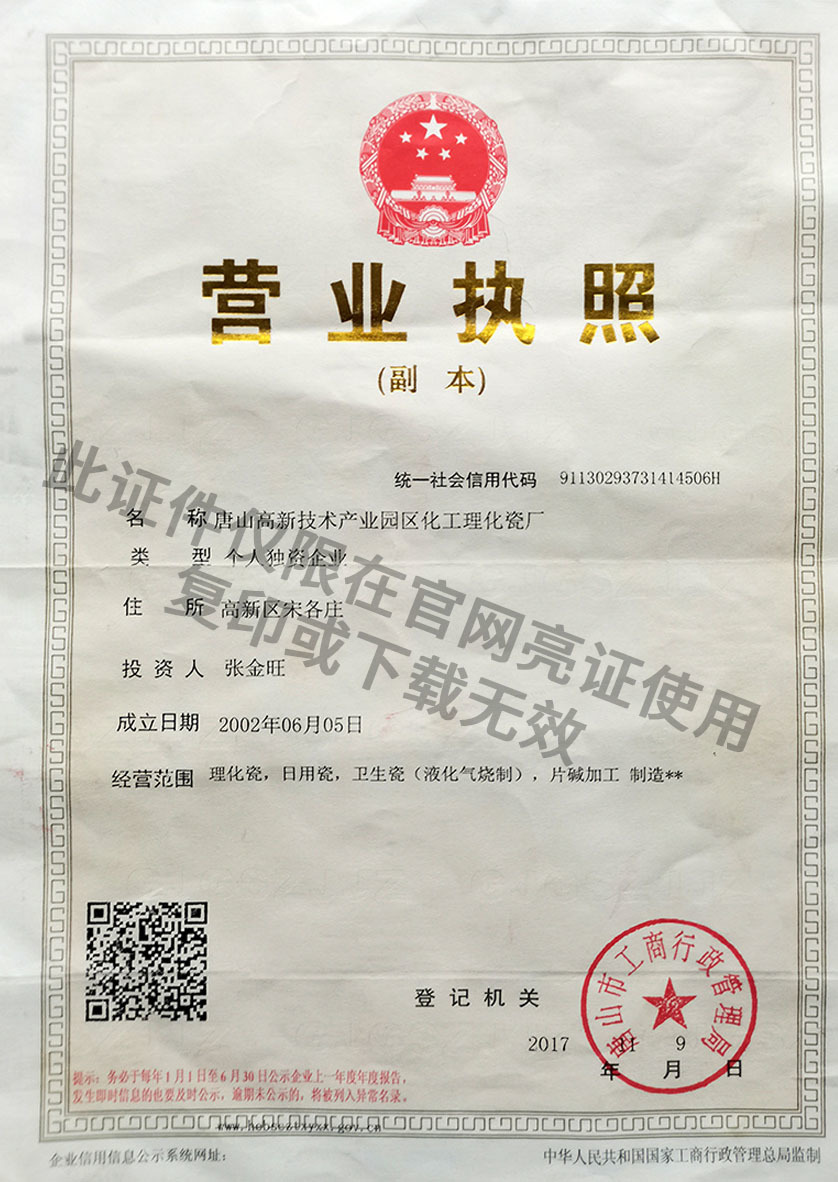
Tangshan High-tech Industrial Park Chemical Physical and Chemical Porcelain Factory
Tangshan Physical and Chemical Ceramics Co., Ltd.
Address: Songgezhuang Chemical and Physical Porcelain Factory, Tangshan High-tech Industrial Development Zone
Telephone: +86-315-5509570 、 +86-315-5509222
Mobile: +86-13903372399 、+86-13832559317
Email: tshglhcc@163.com


Product Center
Follow Us

Online Consultation
If you have any needs, please leave a message, and we will contact you as soon as possible.