What are the applications of corundum tongs?
2022-03-31
Corundum crucible It is something that can be used in high-temperature, extremely cold-resistant, heat-resistant, and chemically corrosive environments. It is used in the testing of some chemical reagents. So what are the applications of corundum crucibles?
(1) Burning solid substances
(2) Evaporation, concentration, or crystallization of solutions (If there is an evaporating dish, an evaporating dish should be selected. Of course, crucibles can also be used for the evaporation, concentration, or crystallization of solutions)
Usage precautions
(1) It can be heated directly, but it cannot be quenched after heating. Crucible tongs can be used to remove it.
(2) After heating the crucible, place it on a clay triangle.
(3) Stir during evaporation; when it is almost dry, evaporate with the residual heat.
Crucibles with an alumina content exceeding 95% are called Corundum crucible 。
1. Corundum crucible It is composed of porous electrofused alumina, has high strength, and is refractory.
2. Corundum crucible Suitable for melting samples with weakly alkaline substances such as anhydrous Na2CO3 as fluxes, but not suitable for strongly alkaline substances such as Na2O2 and NaOH, and acidic substances (such as K2S2O7).
Note: In Japanese, crucible means "dilemma", and is translated as "vortex" or "quagmire" in anime works. (This is a misconception. In fact, the Japanese romaji for crucible should be written as Rutsubo.)
Crucibles can be roughly divided into three categories: the first category is copper smelting crucibles, with specifications in "numbers"; the second category is crucibles for smelting copper alloys, with 100 numbers for the outer round type and 100 numbers for the round type; the third category is steel smelting crucibles, 100 numbers.
The specifications (size) of crucibles are usually represented by serial numbers. A No. 1 crucible has the capacity to melt 1000g of brass, weighing 180g. When melting different metals or alloys in a crucible, the melting amount can be calculated by multiplying the volume density specification number of the crucible by the corresponding metal and alloy coefficient.
The raw materials for crucible production can be summarized into three categories. One is crystalline natural graphite, and the other is plastic refractory.
Nickel crucibles are suitable for melting NaOH, Na2O2, Na2CO3, NaHCO3, and alkaline solvent samples containing KNO3, but not for melting acidic solvents such as KHSO4 or NaHSO4, K2S2O7 or Na2S2O7, and alkaline sulfide flux samples containing sulfur.
Corundum tongs are very strong and refractory. They are widely used in chemistry, often in experiments involving reagent fusion. The corrosion resistance of experimental equipment must be very good, so it can be seen that corundum tongs meet this requirement.
Do you know how to use Corundum crucible ? Today, Bian Xiao will give you a detailed introduction based on my experience, hoping to help you, and welcome everyone to exchange:
1. Too large a temperature difference. When using, place the heat insulation plug (two on each side) into Corundum crucible In the middle, the crucible is located between the hot zone and the cold zone.
2. At such a high temperature, the middle of the tube is soft, so the tube is Corundum crucible More prone to deformation and breakage. It is recommended to add supports on both sides of the pipe.
Also, newly purchased tubes should be baked several times at different temperatures before being used with newly purchased Corundum crucible Together, generally several times are required. At 200℃ and 1000℃, generally keep warm for 1 hour.
4. It is recommended that the heating rate should not be too fast. The silicon carbide furnace tube should not exceed the fastest heating rate of 140℃/h and the fastest limit speed of 10℃/min, especially during cooling Corundum crucible ! The optimal heating rate should not exceed 10℃/min, and the cooling rate should be less than 10℃/min. This support can reduce deformation and breakage. The red arrow indicates gravity, and the blue arrow indicates support.
5. In addition to the above support problems; also, for samples fired in a tube furnace, especially samples to be fired to around 1300℃, it is best to have less moisture (moisture refers to adsorbed water, crystal water, etc. Water that may be produced during the heating process); it is recommended that your sample be pre-fired before being placed in the tube furnace. It is best not to add samples at high temperatures, as this can easily damage Corundum crucible The furnace tube.
6. Do not touch forcefully Corundum crucible Do not keep the temperature at 300℃-900℃, and do not touch the high-temperature furnace tube with low-temperature objects.
Recommended news
2026-05-23
2026-04-08
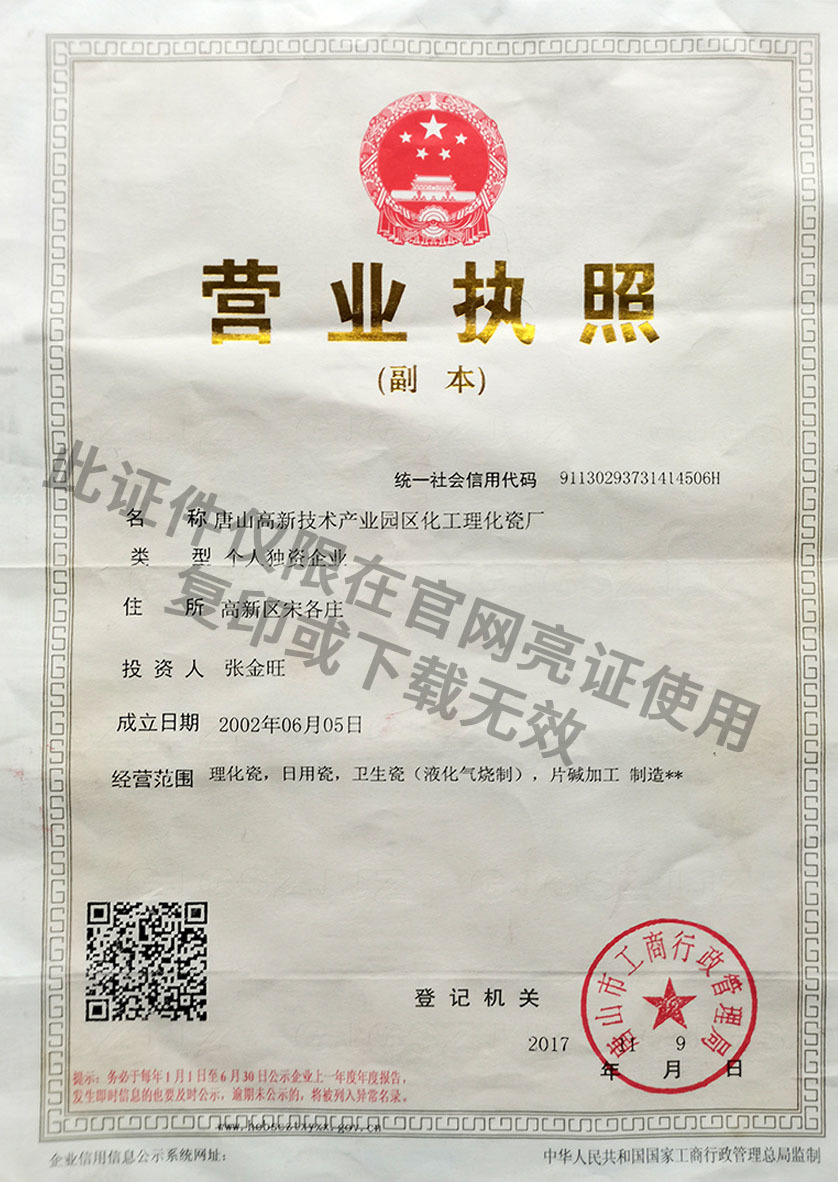
Tangshan High-tech Industrial Park Chemical Physical and Chemical Porcelain Factory
Tangshan Physical and Chemical Ceramics Co., Ltd.
Address: Songgezhuang Chemical and Physical Porcelain Factory, Tangshan High-tech Industrial Development Zone
Telephone: +86-315-5509570 、 +86-315-5509222
Mobile: +86-13903372399 、+86-13832559317
Email: tshglhcc@163.com


Product Center
Follow Us

Online Consultation
If you have any needs, please leave a message, and we will contact you as soon as possible.