language
Alumina ceramic tubes and corundum crucibles: performance comparison and selection recommendations
2025-02-28
Alumina Ceramic Tubes vs. Corundum Crucibles: Performance Comparison and Selection Suggestions In industrial production, the choice of crucible is crucial to the melting and processing of materials. Especially in high-temperature applications, alumina ceramic tubes and corundum crucibles each have their own advantages and disadvantages. Today, we will delve into the performance differences between them and how to choose the most suitable straight crucible for your needs. Characteristics of Alumina Ceramic Tubes Alumina ceramic tubes, as the name suggests, are mainly made from bauxite through high-temperature sintering. They have extremely high high-temperature resistance, capable of withstanding temperatures as high as 1700℃. This material also has good corrosion resistance, capable of resisting corrosion from most chemical substances. Imagine you are melting metal; using a straight crucible made of alumina ceramic tubes allows your metal to be heated evenly at high temperatures, reducing stress from cooling. Isn't that cool? Advantages of Corundum Crucibles Corundum crucibles, mainly composed of Al₂O₃, also have considerable performance. Their melting point is also in the high-temperature range, generally reaching 2050℃. Corundum crucibles have higher thermal conductivity, meaning they heat up faster and the heat distribution is more uniform. If you are looking for a crucible that can quickly increase the temperature, a corundum crucible is like that friend who always arrives early at the meeting place, saving you from waiting. Performa
Alumina Ceramic Tubes vs. Corundum Crucibles: Performance Comparison and Selection Recommendations
In industrial production, the choice of crucible is crucial to the melting and processing of materials. Especially in high-temperature applications, alumina ceramic tubes and corundum crucibles each have their own advantages. Today, we will delve into their performance differences and how to choose the most suitable straight crucible for your needs.
Characteristics of Alumina Ceramic Tubes
Alumina ceramic tubes, as the name suggests, are mainly made from bauxite through high-temperature sintering. They have extremely high high-temperature resistance, capable of withstanding temperatures up to 1700℃. This material also boasts good corrosion resistance, able to withstand the erosion of most chemicals.
Imagine you are melting metal; using a straight alumina ceramic tube crucible allows your metal to be heated evenly at high temperatures, reducing stress from cooling. Isn't that cool?
Advantages of Corundum Crucibles
Corundum crucibles, primarily composed of Al₂O₃, also have noteworthy performance. Their melting point is also in the high-temperature range, generally reaching 2050℃. Corundum crucibles have higher thermal conductivity, meaning they heat up faster and heat distribution is more even.
If you're looking for a crucible that can quickly raise the temperature, a corundum crucible is like that friend who always arrives early for appointments, saving you from waiting.
Performance Comparison: Alumina Ceramic Tubes vs. Corundum Crucibles
1. **Temperature Resistance**: Corundum crucibles have stronger temperature resistance, suitable for high-temperature melting. Alumina ceramic tubes perform excellently in medium-high temperature applications.
2. **Thermal Conductivity**: Corundum crucibles have higher thermal conductivity, allowing for rapid heating, suitable for processes requiring high temperatures in a short time.
3. **Corrosion Resistance**: Alumina ceramic tubes perform better in many chemical environments, able to resist the erosion of some chemical solvents.
4. **Mechanical Strength**: Corundum crucibles exhibit better mechanical strength, suitable for withstanding greater physical pressure.
5. **Cost**: Generally, alumina ceramic tubes are relatively less expensive, suitable for projects with limited budgets.
When choosing a straight crucible, how do you make an informed decision? First, consider your application scenario. If you need to withstand extremely high temperatures and pressures, a corundum crucible is a better choice. Conversely, if your work environment has complex chemical components, an alumina ceramic tube may be more suitable.
Selection Recommendations
Before deciding which crucible to choose, it's best to ask yourself a few questions:
- **What will you primarily use it for?** If it's for metal melting, a corundum crucible may be the best choice; if it's for melting ceramics and glass, an alumina ceramic tube is more suitable.
- **What temperature range do you need?** If it exceeds 1700℃, please choose a corundum crucible directly.
- **What is your budget?** If your budget is limited, an alumina ceramic tube will be a more economical choice.
In short, whether it's an alumina ceramic tube or a corundum crucible, understanding their performance and application scenarios is key to making an informed choice. Hopefully, this article will help you better understand their differences, allowing you to choose the right straight crucible with ease.
Recommended news
2026-05-23
2026-04-08
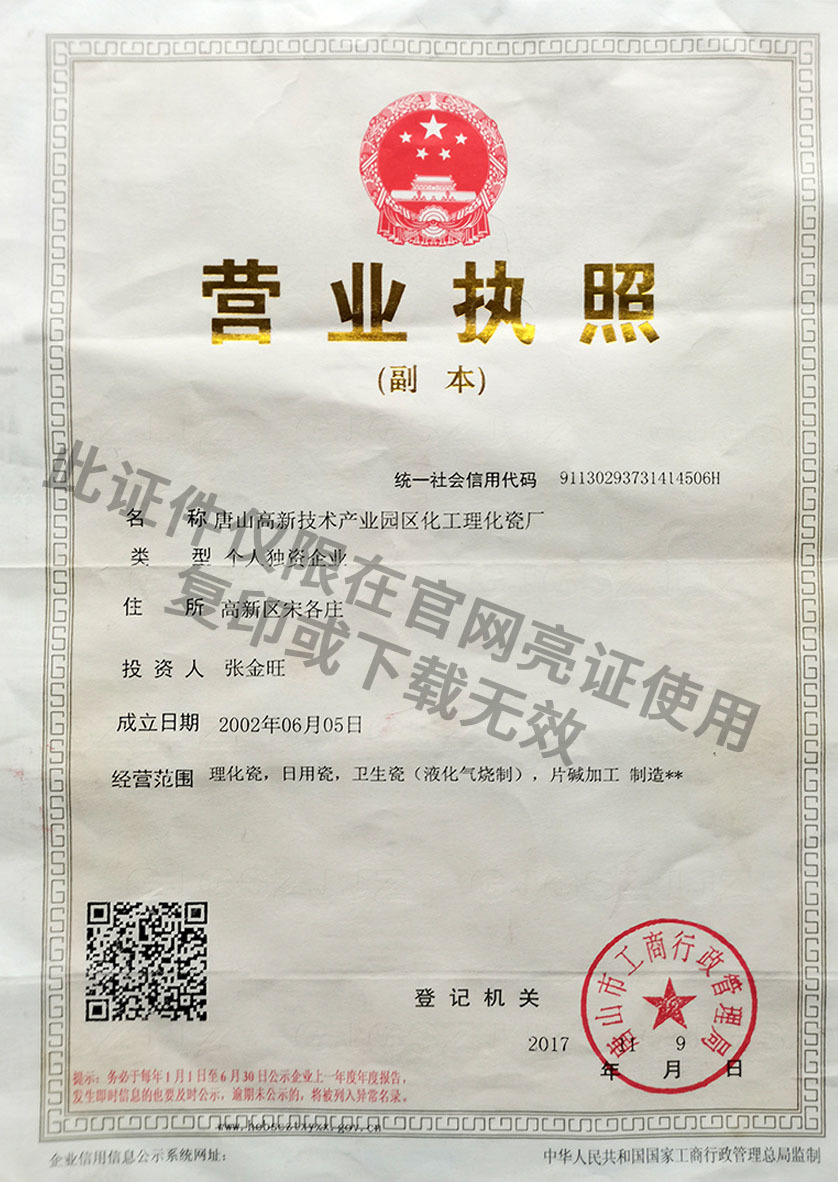
Tangshan High-tech Industrial Park Chemical Physical and Chemical Porcelain Factory
Tangshan Physical and Chemical Ceramics Co., Ltd.
Address: Songgezhuang Chemical and Physical Porcelain Factory, Tangshan High-tech Industrial Development Zone
Telephone: +86-315-5509570 、 +86-315-5509222
Mobile: +86-13903372399 、+86-13832559317
Email: tshglhcc@163.com


Product Center
Follow Us

Online Consultation
If you have any needs, please leave a message, and we will contact you as soon as possible.