Share some tips on using alumina tubes and quartz tubes in a tube furnace!
2022-01-25
Sharing techniques for using alumina tubes and quartz tubes in a tube furnace!
When using a tube furnace, different furnace tubes should be selected according to different operating temperatures. Generally, stainless steel tubes, quartz tubes, alumina tubes etc. are used. We will mainly discuss the maintenance and use techniques of alumina and quartz tubes in tube furnaces.
1. alumina tubes It is a very important component in the tube furnace. Due to the use of alumina material, its resistance to rapid cooling and heating is poor, and its service life is very limited. Generally, it is recommended to maintain a heating and cooling rate of 5/Min. The cooling process must set a cooling curve; direct natural cooling from high temperature is not allowed, as this can easily cause the tube to burst. The temperature at which tubes are prone to bursting is generally 800-1000℃.
2. New alumina tubes or long-unused tubes should be baked at 300-400℃ for 5-6 hours to remove alumina tubes the moisture inside, which can alumina tubes prolong their service life. Water is a major factor causing alumina tubes to break.
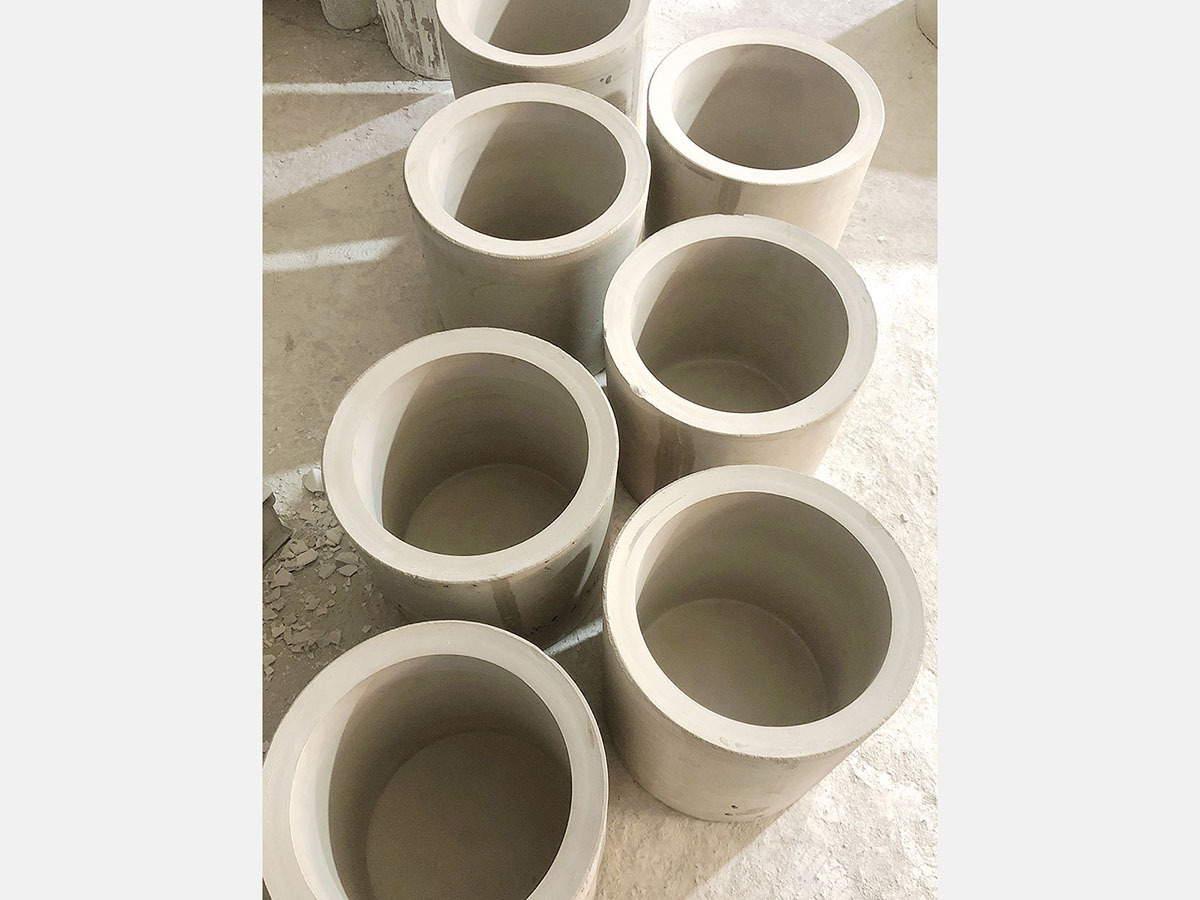
3. Maintain the cleanliness of the furnace interior. There should be no residue that reacts with Al2O3 inside the furnace tube. When burning materials, to extend the service life of the furnace tube, do not place the materials directly in the furnace tube; place them in a boat-shaped crucible.
4. When heating, be sure to place alumina plugs inside the furnace tube, two on each side, for a total of four. The distance between the inner ends of the two plugs on both sides should be approximately 360 mm. If plugs are not placed, the temperature at both ends of the furnace tube will be higher, and the O-rings in the flange will not be able to withstand the higher temperature, resulting in reduced airtightness. Placing plugs at both ends of the furnace tube will help create a balanced temperature field.
5. alumina tubes The flanges at both ends need to be supported by a support frame, so that alumina tubes no vertical stress is applied, and the alumina tube will not bend or break at high temperatures due to stress.
6. Do not place materials directly in the furnace tube to avoid contamination. If the material being burned is volatile, different materials and tubes can be used. The furnace tube of this furnace is very easy to remove.
7. If the furnace needs to be used continuously, the furnace temperature can only be lowered to around 200℃ and maintained; it cannot be lowered to room temperature. This is beneficial to the service life of the furnace tube.
8. alumina tubes The temperature resistance is related to its purity. The higher the purity, the higher the temperature resistance, but the worse its ability to withstand rapid cooling and heating.
The uses of quartz tubes are different; let's talk about their usage:
1. The softening point of quartz tubes is 1270℃. When used at 1200℃, it should not exceed 3 hours.
2. It is generally not recommended to introduce hydrogen. If hydrogen with a concentration that is not explosive needs to be introduced, reliable measures must be taken. When introducing hydrogen, do not stand at both ends of the furnace tube. If hydrogen is introduced, please use a stainless steel tube. Because the thermal conductivity of stainless steel is greater than that of quartz, both ends of the stainless steel tube need water cooling; otherwise, the O-ring temperature will be too high to seal. 3. Keep the furnace tube clean. Substances that react with silicon dioxide cannot be left inside the furnace tube. When burning materials, to extend the service life of the furnace tube, do not place the materials directly in the furnace tube; place them in a boat-shaped crucible.
4. When heating, be sure to place a ceramic plug inside the furnace tube; otherwise, the temperature at both ends of the furnace tube will be high, and the O-rings in the flange will not be able to withstand the high temperature, resulting in reduced airtightness. The plugs at both ends of the furnace are beneficial for forming a balanced temperature field.
5. When heating, be sure to place alumina plugs in the furnace tube, 2 on each side, for a total of 4. The distance between the inner ends of the plugs on both sides can be around 450 mm (because the heating section length of the HTL1200 split tube furnace is 400 mm). If plugs are not placed, the temperature at both ends of the furnace tube will be higher, and the O-rings in the flange will not be able to withstand the higher temperature, resulting in reduced airtightness. Placing plugs at both ends of the furnace tube will help create a balanced temperature field.
6. The temperature resistance of quartz tubes is related to their purity. The higher the purity, the higher the temperature resistance.
Recommended news
2026-05-23
2026-04-08
Tangshan High-tech Industrial Park Chemical Physical and Chemical Porcelain Factory
Tangshan Physical and Chemical Ceramics Co., Ltd.
Address: Songgezhuang Chemical and Physical Porcelain Factory, Tangshan High-tech Industrial Development Zone
Telephone: +86-315-5509570 、 +86-315-5509222
Mobile: +86-13903372399 、+86-13832559317
Email: tshglhcc@163.com


Product Center
Follow Us

Online Consultation
If you have any needs, please leave a message, and we will contact you as soon as possible.