What are the differences between high-temperature ceramics and thermal insulation materials?
2022-12-01
Ultra-high temperature ceramics (UHTCs) refer to ceramic compounds with melting points exceeding 3000℃, such as ZrC, HfC, TaC, HbB2, ZrB2, and HfN. They possess excellent thermochemical stability and superior physical properties, including high elastic modulus, high hardness, low saturation vapor pressure, high thermal conductivity and electrical conductivity, moderate thermal expansion rate, and good thermal shock resistance. They can maintain high strength at high temperatures and typically include transition metal borides, carbides, nitrides, and their composites.
1. High-Temperature Boride Ceramics in Ultra-High Temperature Ceramics
High-temperature boride ceramics mainly include HfB2, ZrB2, TaB2, TiB2, and YB4 ceramics. These ceramic materials, due to their strong covalent bonds, are characterized by high melting points, high hardness, high strength, low evaporation rate, high thermal conductivity, and electrical conductivity. ZrB2 and HfB2 are the most widely studied UHTCs among boride ceramics, but their poor oxidation resistance limits their widespread application.
2. High-Temperature Carbide Ceramics in Ultra-High Temperature Ceramics
Among carbide ceramics, ZrC, HfC, TaC, and TiC can be used at high temperatures. These ceramics have very high melting points, do not undergo solid-state transformations during heating or cooling, and exhibit good thermal shock resistance and high-temperature strength. However, carbide UHTCs have low fracture toughness and poor oxidation resistance.
3. High-Temperature Nitride Ceramics in Ultra-High Temperature Ceramics
High-temperature nitride ceramics such as ZrN, HfN, and TaN also exhibit good properties. Transition metal nitrides have high melting points. However, the melting point of these refractory nitrides is also related to environmental pressure, and not all refractory nitrides are suitable for operation in high-temperature, high-pressure oxidizing environments. Transition metal nitrides have important applications in tool surface hardening layers.
Ultra-high temperature ceramics have the functions of heat insulation, high-temperature oxidation resistance, and corrosion resistance. Their typical structure is a double-layer system, consisting of a surface ceramic thermal barrier layer and an intermediate layer. The ceramic thermal barrier layer essentially acts as insulation in the thermal barrier coating, effectively reducing heat conduction to the metal substrate and protecting key components. Ceramic materials suitable for thermal barrier coatings should meet the requirements of high melting point, low thermal conductivity, better matching of the coefficient of thermal expansion with the metal substrate, good chemical stability at high temperatures, high adhesion to the metal layer, and no phase transformation between room temperature and operating temperature.
The so-called heat-insulating materials are mainly used in the aerospace engine industry and have good heat insulation and high-temperature oxidation resistance. It is currently common one of the high-temperature protective coatings. Heat-insulating materials have the functions of heat insulation, high-temperature oxidation resistance, and corrosion resistance. Their typical structure is a double-layer system, consisting of a surface ceramic thermal barrier layer and an intermediate layer. Heat-insulating materials essentially act as insulation in the thermal barrier coating, effectively reducing heat conduction to the metal substrate and protecting key components. Ceramic materials suitable for heat-insulating materials should meet the requirements of high melting point, low thermal conductivity, better matching of the coefficient of thermal expansion with the metal substrate, good chemical stability at high temperatures, high adhesion to the metal layer, and no phase transformation between room temperature and operating temperature.
Recommended news
2026-05-23
2026-04-08
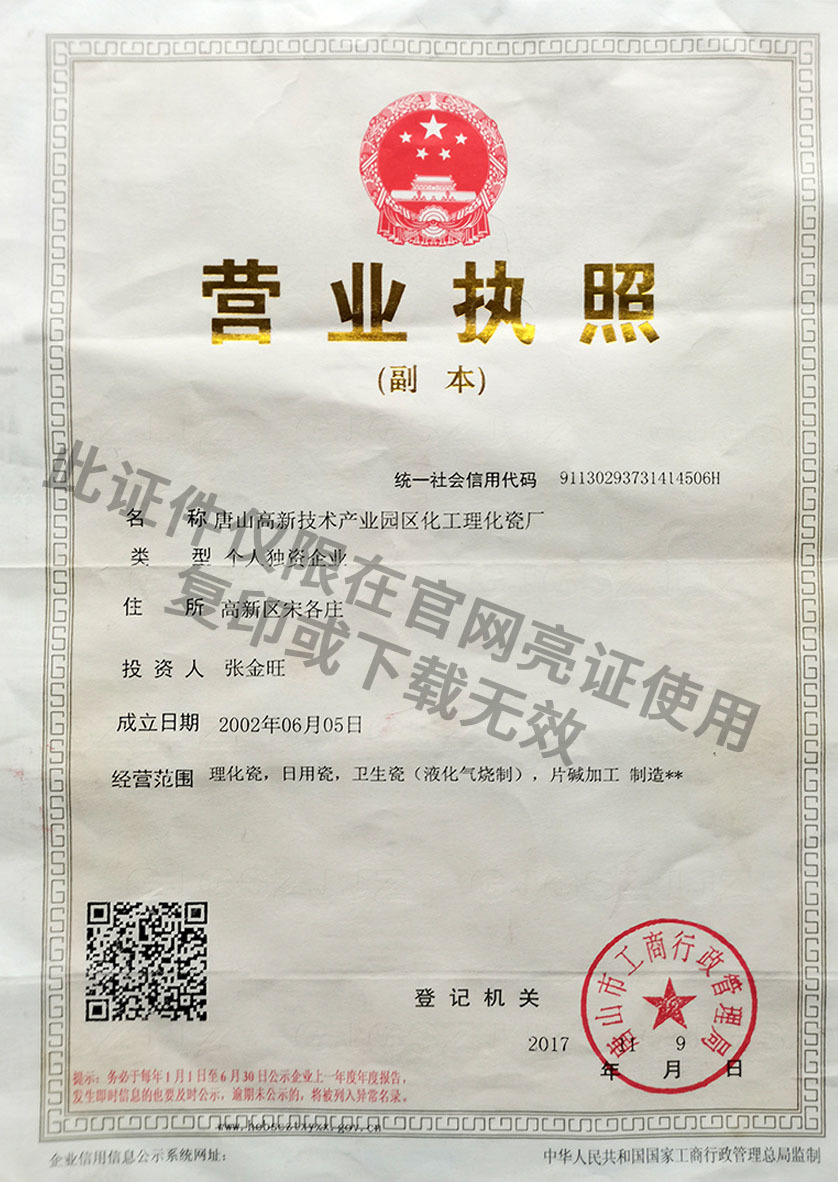
Tangshan High-tech Industrial Park Chemical Physical and Chemical Porcelain Factory
Tangshan Physical and Chemical Ceramics Co., Ltd.
Address: Songgezhuang Chemical and Physical Porcelain Factory, Tangshan High-tech Industrial Development Zone
Telephone: +86-315-5509570 、 +86-315-5509222
Mobile: +86-13903372399 、+86-13832559317
Email: tshglhcc@163.com


Product Center
Follow Us

Online Consultation
If you have any needs, please leave a message, and we will contact you as soon as possible.