What are the differences between high-temperature ceramics and low-temperature ceramics?
2022-08-15
High-temperature ceramic Because of its high-temperature resistance, it is widely used in mechanical equipment. So what is High-temperature ceramic ? How is it classified? Let's take a look.
1. Alumina ceramic
Alumina ceramic is a promising high-temperature structural material with a high melting point. It can be used to manufacture high-temperature crucibles, refractory furnace tubes, and special wear-resistant materials.
2. Silicon carbide ceramic
Silicon carbide ceramic not only has excellent room temperature mechanical properties, such as excellent oxidation resistance, high bending strength, high wear resistance, good corrosion resistance, and low friction coefficient, but also has excellent high-temperature mechanical properties among known ceramic materials. It does not react with other inorganic acids and has strong corrosion resistance. It can also resist oxidation at high temperatures. In addition, it can also resist cold and hot shocks without causing fracture. It is often used to manufacture mechanical parts such as bearings, mechanical seals, turbine blades, permanent molds, etc.
3. Boron carbide ceramic
Boron carbide ceramic materials have the properties of light weight, high wear resistance, high impact resistance, high hardness, and neutron absorption. It not only has high acid and alkali resistance, but also resists air corrosion at 1000℃, but boron carbide ceramic is easily oxidized at higher temperatures. Boron carbide has broad application prospects in high-tech industries, nuclear power technology, and national defense industries. It is an important strategic material in the national economy and national defense construction, and is widely used.
High-temperature porcelain fired above 1300 degrees is called High-temperature ceramic . The higher the temperature, the greater the density of glaze crystals, the higher the surface strength of the porcelain, and the less likely it is to be scratched. The color is "white", and it is not yellowish white. It has the reputation of "white as jade". However, low-temperature porcelain is not delicate enough, and the color is not white enough.
High-temperature ceramic It can also be fired again at high temperature; however, low-temperature porcelain cannot. In addition, it can also be distinguished by sound, High-temperature ceramic It has good porcelain quality and a clear sound, which depends on the water absorption rate. The water absorption rate of high-temperature sintered ceramics is low.
Water absorption measurement:
1. Use special instruments to measure (vacuum, water immersion).
2. Boil in boiling water for 2 hours.
3. Soak in clean water for 24 hours.
The data obtained by each method is slightly different, but as long as the same method is used to measure two ceramic chips, the results are comparable. High-temperature ceramic The most obvious difference from low-temperature ceramics is water absorption. High-temperature ceramic The water absorption rate is less than 0.2%, it is easy to clean, does not absorb odors, and will not cause glaze cracking and local water leakage. However, in comparison, the water absorption rate of medium and low-temperature ceramics is much higher than this standard, and sewage is easy to enter. It is not easy to clean, and it will emit unpleasant odors. Over time, cracks and water leakage may also occur
Recommended news
2026-05-23
2026-04-08
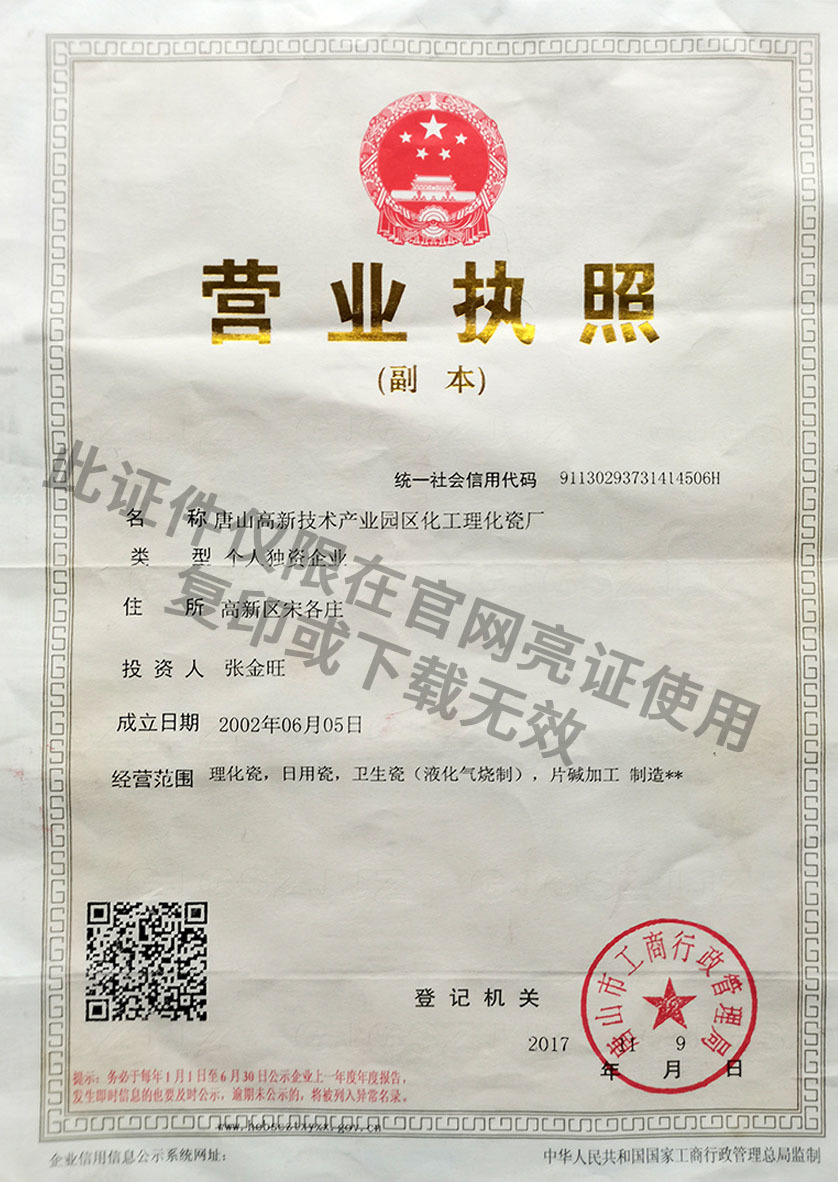
Tangshan High-tech Industrial Park Chemical Physical and Chemical Porcelain Factory
Tangshan Physical and Chemical Ceramics Co., Ltd.
Address: Songgezhuang Chemical and Physical Porcelain Factory, Tangshan High-tech Industrial Development Zone
Telephone: +86-315-5509570 、 +86-315-5509222
Mobile: +86-13903372399 、+86-13832559317
Email: tshglhcc@163.com


Product Center
Follow Us

Online Consultation
If you have any needs, please leave a message, and we will contact you as soon as possible.