Application and types of industrial ceramic performance
2022-07-14
Industrial Ceramics It is a type of fine ceramics that can perform mechanical, thermal, and chemical functions in applications. Industrial Ceramics It has a series of advantages such as high temperature resistance, corrosion resistance, wear resistance, and scouring resistance. It can replace metal materials and organic polymer materials for use in harsh working environments. It has become an indispensable important material in traditional industrial transformation, emerging industries, and high-tech industries, and has very broad application prospects in energy, aerospace, machinery, automobiles, electronics, and chemical industries.

Industrial Ceramics It has its own advantages and wide applications, such as using high-hardness, high-wear-resistant ceramics to produce mechanical parts, seals, and cutting tools; using high-wear-resistant, high-strength, and high-toughness ceramics to produce wear-resistant, lightweight automotive parts, heat insulation parts, gas turbine blades, piston tops, and inserts. And using chemically stable, corrosion-resistant ceramics in contact with bioenzymes to produce crucibles for smelting metals, heat exchangers, and artificial dental enamel and other biomaterials.
With the continuous development of science and technology, Industrial Ceramics breakthrough progress has been made, especially in the research and development of multiphase composites and nanomaterials. In the research of multiphase composite ceramics, it has developed from the original single-phase, high-purity characteristics to multiphase composite ceramics. The research and development of self-reinforced composite fibers or crystal top-reinforced composites, gradient functions, and nanocomposites has effectively solved the technical problems of large brittleness, low reliability, unsatisfactory room temperature strength, and insufficient toughness of single-phase advanced ceramics.
In nanomaterial research, Industrial Ceramics it is developing from the micrometer level to the nanometer level. Many new technologies for preparing nanopowders have been developed, such as chemical precipitation, metal organic compound decomposition, and chemical vapor deposition, providing favorable conditions for the production of advanced nano-ceramics.
Applications show that the refinement of nanoceramic grains can obtain materials without defects or harmful defects, greatly improving the original properties and even exhibiting new properties, thus making the space wider. Therefore, it has become a new research subject and has received much attention. It is expected that the future will be the era of high-performance advanced ceramics, which will play an increasingly important role in modern science and technology and modern industry.
Industrial Ceramics Types and Applications
(1) Ordinary
Refers to clay ceramics, made by firing clay, feldspar, and quartz in a certain proportion. Their properties depend on the purity, particle size, and proportion of the three raw materials. They are generally relatively hard, corrosion-resistant, non-oxidizing, non-conductive, can withstand a certain high temperature, and have good processability.
(2) Alumina
Alumina has a high melting point, high hardness, high strength, good chemical corrosion resistance, and dielectric properties. However, due to its high brittleness, poor impact resistance and thermal shock resistance, it cannot withstand drastic changes in ambient temperature, and it can also be used to manufacture high-hardness cutting tools.
Recommended news
2026-05-23
2026-04-08
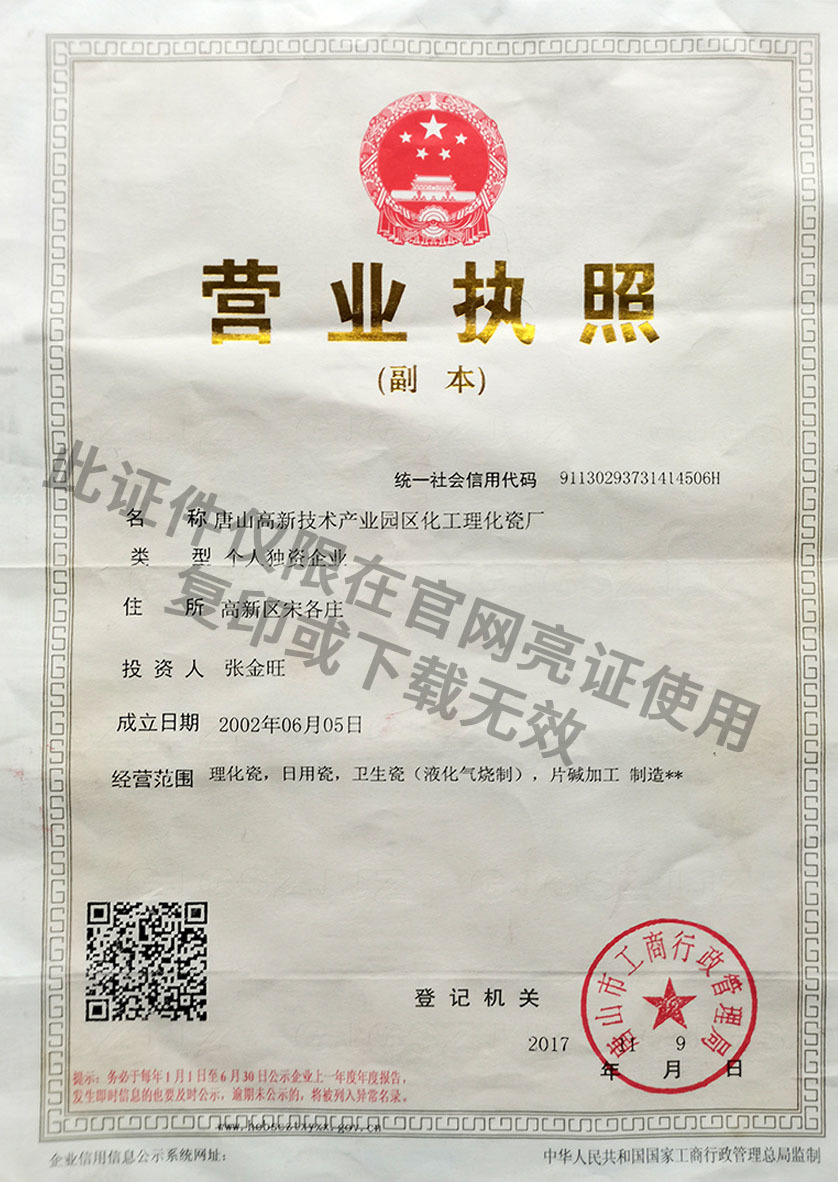
Tangshan High-tech Industrial Park Chemical Physical and Chemical Porcelain Factory
Tangshan Physical and Chemical Ceramics Co., Ltd.
Address: Songgezhuang Chemical and Physical Porcelain Factory, Tangshan High-tech Industrial Development Zone
Telephone: +86-315-5509570 、 +86-315-5509222
Mobile: +86-13903372399 、+86-13832559317
Email: tshglhcc@163.com


Product Center
Follow Us

Online Consultation
If you have any needs, please leave a message, and we will contact you as soon as possible.