Alumina grinding jar: how to choose the right size and material for your lab
2026-11-17
Tangshan High-tech
Article overview
This article is a complete 2026 selection guide for laboratory professionals evaluating alumina grinding jars. It covers purity grades, volume sizing, material comparisons, media compatibility, and Singapore procurement — structured to answer the most common purchasing questions in a single, authoritative resource.
Table of contents
- 1. What is an alumina grinding jar?
- 2. Understanding Al2O3 purity grades: 92%, 95%, and 99% explained
- 3. How to choose the right jar size for your application
- 4. Alumina vs. other ceramic grinding jar materials: a direct comparison
- 5. Matching grinding media and seals to your alumina jar
- 6. Sourcing alumina grinding jars in Singapore: lead times, duties, and suppliers
- 7. Common selection mistakes and how to avoid them
- 8. FAQ
What is an alumina grinding jar?
An alumina grinding jar is a cylindrical ceramic milling container fabricated from α-Al₂O₃ (aluminium oxide), designed to hold samples and grinding media during high-energy ball milling. Its defining characteristics — a Mohs hardness of 9, density of approximately 3.987 g/cm³, and a melting point of 2,072 °C — make it one of the most chemically inert and wear-resistant options available in a modern laboratory setting.
Unlike stainless steel or tungsten carbide vessels, an alumina grinding jar introduces minimal metallic contamination to processed samples. This matters enormously when preparing powders for XRD analysis, battery electrode research, or ceramic precursor synthesis, where even trace iron or nickel content can skew results. The jar is typically used as a planetary ball mill jar, mounted on a planetary ball mill where centrifugal and rotational forces generate the high-energy impacts needed to reduce particle size.
At its core, the alumina grinding jar is defined by two selection axes: the purity grade of the Al₂O₃ ceramic body, and the internal volume of the vessel. Every other specification — wall thickness, lid design, compatible grinding media — flows from these two primary choices. The sections below address each axis in detail.
Why aluminium oxide outperforms most alternatives
Aluminium oxide's crystalline α-phase delivers a hardness second only to diamond and cubic boron nitride among common laboratory ceramics. In practical terms, this means abrasion rates are extremely low when processing materials with a Mohs hardness below 7 — which covers the vast majority of mineral, pharmaceutical, and advanced material powders handled in research labs. The result is a powder grinding container that can run hundreds of milling cycles before measurable wear affects sample purity.
Beyond hardness, Al₂O₃ offers excellent chemical resistance to acids, alkalis, and organic solvents at temperatures up to 1,600 °C. This broad chemical compatibility is why alumina remains the benchmark material against which alternatives like zirconia or agate are assessed.
Key components: jar body, lid, and sealing system
A complete grinding jar with lid assembly consists of three functional parts. The sintered ceramic body forms the primary grinding chamber. The lid — typically made from the same Al₂O₃ grade as the body — seals the chamber and prevents powder loss or atmospheric contamination during milling. The sealing ring, usually PTFE or silicone, creates an airtight gasket between lid and body. Choosing incompatible seal materials is one of the most common procurement oversights, and it is addressed in detail in Section 5.
Understanding Al2O3 purity grades: 92%, 95%, and 99% explained
The purity grade of an Al2O3 grinding jar directly determines its hardness, chemical inertness, brittleness, and cost. The industry offers four main grades — 92%, 95%, 99%, and 99.7% — each suited to a different research context. Knowing where your application sits on this spectrum prevents both under-specification and costly over-specification.
The 92% and 95% grades: workhorses of routine milling
A 92% purity Al2O3 grinding jar contains a meaningful proportion of silica and other sintering aids. This reduces hardness slightly versus higher grades but significantly improves toughness — the material can absorb mechanical shock without chipping. Industry experience consistently shows that 92% jars are robust enough for routine mineral processing, cement research, and soil science sample preparation. They are also the most affordable option, often 30–40% cheaper than equivalent 99% grade vessels.
The 95% grade is the most widely deployed specification in Singapore research labs, based on procurement patterns observed across academic and industrial facilities. It offers a well-balanced trade-off: hardness is high enough to process mid-range abrasive materials, chemical purity meets the requirements of most analytical workflows, and the price premium over 92% is modest — typically 15–25%. For the majority of laboratories that do not work with ultra-sensitive spectroscopic or battery-grade materials, 95% is the rational default choice.
The 99% and 99.7% grades: precision applications only
High purity alumina jars — 99% and above — are specified when aluminium oxide contamination itself must be minimised, or when the processed material demands maximum chemical inertness. Solid-state battery research, fluorescent phosphor synthesis, and high-purity catalyst preparation are representative applications. The trade-off is unambiguous: higher purity means a denser, harder ceramic body, but also a more brittle one. A 99% high purity alumina jar dropped on a hard floor or thermally cycled too rapidly is at genuine risk of cracking. Procurement decisions for this grade must include storage and handling protocols, not just unit cost.
"Purity is a double-edged specification. Beyond 95% Al₂O₃, every incremental point of purity improvement comes with a disproportionate increase in brittleness. For most laboratory workflows, 95% strikes the optimal balance between performance and durability." — Consensus view across ceramic materials engineering literature, corroborated by published aluminium oxide properties data.
How to choose the right jar size for your application
Jar volume is the most practically impactful selection variable for day-to-day lab operations. Too small, and throughput becomes a bottleneck; too large, and ball-to-powder ratios fall outside the effective milling window, reducing grinding efficiency. The correct approach is to work backwards from sample batch size, not forwards from jar availability.
The standard size range and what each volume is best for
Laboratory grinding jars are commercially available in volumes ranging from 25 mL to 2,000 mL. The four most common sizes — 50 mL, 100 mL, 250 mL, and 500 mL — cover approximately 90% of research lab requirements. The general rule endorsed by ball mill manufacturers is that the combined volume of grinding balls and sample powder should not exceed 60–70% of the jar's total internal capacity. Exceeding this fill ratio prevents effective ball movement and can generate excessive heat.

A 50 mL laboratory grinding jar is ideal for precious or scarce samples — milligram-to-gram quantities of research compounds, rare minerals, or synthesised precursors where material loss must be minimal. At the other end, a 500 mL powder grinding container suits pilot-scale batch preparation or when multiple milling cycles need to be consolidated to reduce instrument time.
Step-by-step size selection process
- Define your batch size: Determine the maximum gram quantity of powder you will process per milling run, including any solvent if wet milling.
- Apply the fill ratio rule: Multiply your batch volume by 1.5 to 1.7 to obtain the minimum required jar internal volume (accounting for the 60–70% fill ratio limit).
- Check planetary mill compatibility: Confirm that your target jar volume is listed in your mill's approved jar size range; mismatched jar weights create dangerous imbalance.
- Consider wall thickness: Larger jars have proportionally thicker walls, reducing actual internal volume versus the nominal label — always verify the net usable volume in the datasheet.
- Assess number of runs: If throughput demands many small batches, a 100 mL jar run repeatedly is often more practical than a single oversized vessel requiring longer milling cycles.
Alumina vs. other ceramic grinding jar materials: a direct comparison
Choosing between an alumina grinding jar and alternatives — zirconia, agate, or stainless steel — requires a clear-eyed assessment of your sample's chemical sensitivity, hardness, and contamination tolerance. No single material is universally superior. Alumina excels in chemical inertness and cost, but it is not always the right tool for the job.
Material comparison table
| Property | Alumina (Al₂O₃) 95% | Zirconia (ZrO₂) | Agate (SiO₂) | Stainless steel (316L) |
|---|---|---|---|---|
| Mohs hardness | 9 | 8.5 | 7 | 5.5–6 |
| Density (g/cm³) | 3.75–3.90 | 6.0–6.1 | 2.65 | 8.0 |
| Chemical resistance | Excellent (most acids/alkalis) | Excellent | Good (avoid HF) | Moderate (Fe contamination risk) |
| Contamination risk | Low (Al only) | Low (Zr only) | Low (Si, Mg) | High (Fe, Ni, Cr) |
| Relative cost (100 mL jar) | S$80–S$160 | S$220–S$450 | S$90–S$180 | S$40–S$80 |
| Best for | General ceramic, mineral, pharma | Battery materials, fine ceramics | Soft minerals, soil science | Routine industrial milling |
Note: Price estimates are indicative for Singapore market (2026), based on standard commercial supplier catalogues. Actual prices vary by quantity and supplier.
When to choose a zirconia grinding jar instead
The zirconia grinding jar is the primary alternative when alumina contamination is itself problematic — for example, in solid-state electrolyte research where trace Al³⁺ ions alter ionic conductivity. Zirconia is also tougher than alumina at equivalent hardness, making it more resistant to impact cracking. The significant cost premium (often 2–3× that of alumina) is justified only when your analytical method has the sensitivity to detect and reject Al₂O₃ contamination at the sub-100 ppm level. For the overwhelming majority of labs, an alumina jar remains the more practical choice.
Matching grinding media and seals to your alumina jar
Even the best-specified alumina grinding jar will underperform — or fail prematurely — if paired with incompatible grinding balls or an ill-fitted sealing ring. Media selection is not an afterthought; it is an integral part of the milling system design.
Choosing the right grinding balls
The fundamental rule governing ball mill grinding media selection is straightforward: the hardness of the grinding balls must be equal to or greater than the hardness of the jar material, and both must exceed the hardness of the sample being processed. Using alumina grinding balls inside an alumina jar maintains a consistent contamination profile — any wear debris is chemically identical to the jar itself, simplifying post-milling analysis.
In 2026, a prominent trend across Southeast Asian research institutions is the adoption of zirconia balls inside alumina jars for ultra-fine particle size reduction. Zirconia's higher density (6.0–6.1 g/cm³ versus alumina's 3.75–3.90 g/cm³) generates greater impact energy per ball, reducing milling time significantly. The trade-off is the introduction of Zr contamination; for samples where this is analytically tolerable, the efficiency gain is substantial. It is a pragmatic compromise worth evaluating case by case.
Sealing ring materials and their compatibility
Why do so many labs overlook the sealing ring? It is a small component with an outsized impact on milling outcomes. PTFE seals are the most broadly compatible choice: chemically inert, resistant to most solvents, and suitable for temperatures up to approximately 260 °C. Silicone seals offer greater elasticity and form a tighter gasket on slightly irregular lid surfaces, but they are unsuitable for use with strong organic solvents such as acetone or hexane. For cryogenic milling or high-temperature applications, consult the seal manufacturer's specific temperature ratings — using an out-of-specification seal risks powder leakage or seal degradation that contaminates the entire batch.
Sourcing alumina grinding jars in Singapore: lead times, duties, and suppliers
Procurement of ceramic laboratory consumables in Singapore presents specific logistical challenges that many researchers underestimate until they face a critical delay. Understanding the local supply chain in 2026 is as important as selecting the correct technical specification.
Import duties, GST, and typical lead times
Singapore applies a 9% Goods and Services Tax (GST, as of 2026) to imported laboratory equipment and consumables. Import duties on ceramic laboratory vessels are generally zero under Singapore's open trade framework, but GST is levied on the customs value plus freight and insurance (CIF). For budget planning, add 9–12% on top of the ex-works unit price to account for GST and freight on shipments from China, Japan, or Germany.
Lead times vary considerably by source region. Shipments from Chinese manufacturers via air freight typically arrive within 7–14 working days. European suppliers (Germany, the UK) generally require 3–6 weeks, including customs clearance. The critical consideration for Singapore labs is that most alumina grinding jar suppliers do not hold local inventory — stock is manufactured or fulfilled to order. This means procurement should occur at least 4–6 weeks before the jar is operationally needed. Maintaining a minimum stock of one spare jar per active milling configuration is a practice that experienced laboratory managers in Singapore consistently endorse.
Supplier evaluation criteria for Singapore buyers
When evaluating suppliers of industrial grinding vessels and ceramic milling pots for the Singapore market, four criteria should anchor the decision. First, verify that the supplier provides a material certificate or purity test report for each batch — not just a catalogue specification. Second, confirm that spare lids and sealing rings are available as separate line items; a jar with a chipped lid is otherwise unusable. Third, assess the supplier's minimum order quantity (MOQ): many Chinese manufacturers set an MOQ of 5–10 units per size, which is impractical for research labs with low-volume needs. Fourth, check whether the supplier has a Singapore-based distributor or at least a GST-registered local agent, which simplifies invoicing for institutional purchasing departments.
Common selection mistakes and how to avoid them
Even experienced researchers make predictable errors when specifying an alumina grinding jar. Identifying these pitfalls in advance can prevent both wasted expenditure and failed experiments.
Mistake 1: Defaulting to the highest purity grade
The assumption that 99% Al₂O₃ is always better than 95% is one of the most pervasive misconceptions in the lab consumables space. As noted earlier, higher purity translates directly into greater brittleness. A 99% jar subject to routine bench handling — placing it on a hard surface without a mat, mild thermal shock from a warm sample — is at measurably higher fracture risk than its 95% counterpart. For applications that do not require sub-ppm-level purity, specifying 99% adds cost and fragility without a commensurate analytical benefit. The 95% grade is the professional default for good reason.
Mistake 2: Ignoring the corundum grinding vessel's thermal properties
An aluminium oxide milling container — also called a corundum grinding vessel in classical materials science terminology — has a coefficient of thermal expansion (CTE) of approximately 8.1 × 10⁻⁶ /°C. This is relevant when milling generates significant heat, or when jars are transferred between temperature-controlled environments and ambient lab conditions. Rapid thermal cycling creates internal stresses. The practical implication is simple: allow jars to equilibrate to room temperature before opening them after a high-energy milling run, and avoid placing a hot jar on a cold steel bench surface. Of course, there are cases where rapid cooling is unavoidable — in those situations, pre-warming the receiving surface mitigates thermal shock risk.
Mistake 3: Treating the milling bowl as a universal vessel
Just as a chef's knife is not a suitable substitute for a cleaver regardless of how sharp it is, a ceramic milling pot designed for a planetary ball mill is not interchangeable with one designed for a roller mill or vibratory mill. The mechanical loading profiles are fundamentally different. Jar wall thickness and base geometry are engineered for specific mill types. Using a jar outside its intended mill configuration can cause eccentric loading, lid seal failure, or catastrophic jar fracture at high RPM. Always cross-reference the jar's rated RPM and G-force tolerance against your mill's operating parameters.
Frequently asked questions
Q: What is the difference between a 95% and 99% alumina grinding jar?
A: The 95% grade contains a small proportion of sintering additives (mainly silica), which improves toughness and impact resistance while reducing brittleness. The 99% grade is chemically purer and harder, but significantly more brittle and expensive. For most laboratory applications, 95% delivers the best balance of durability and analytical performance without unnecessary cost.
Q: Can I use zirconia grinding balls with an alumina grinding jar?
A: Yes, and this combination is increasingly common in 2026 for ultra-fine milling. Zirconia balls are denser than alumina balls, generating higher impact energy per unit volume. The trade-off is that your sample will contain trace Zr contamination from ball wear. If your analytical method can tolerate Zr at sub-ppm levels, the milling efficiency gain is worth the trade-off.
Q: What jar size should I use for a 10 g powder sample?
A: For a 10 g dry powder sample, a 100 mL alumina grinding jar is typically appropriate. This keeps the combined volume of sample and grinding media within the recommended 60–70% fill ratio. If the sample has very low bulk density (e.g., fluffy organic powders), a 250 mL jar may be more suitable to ensure adequate ball movement.
Q: Where can I buy alumina grinding jars in Singapore with short lead times?
A: Local laboratory equipment distributors in Singapore — including those supplying A*STAR institutes and NUS/NTU research labs — typically carry standard 100 mL and 250 mL alumina jars in stock. For non-standard sizes or high purity (99%) grades, air-freight orders from certified Chinese or Japanese manufacturers generally deliver within 7–14 working days. Always request a material certificate before purchase.
Q: How do I know when an alumina grinding jar needs to be replaced?
A: Visible surface pitting, micro-cracking near the lid rim, or a measurable increase in Al content in your processed samples (detected via ICP or XRF) are reliable indicators of jar degradation. As a general maintenance rule, inspect the internal surface under adequate lighting after every 50 high-energy milling runs. Replace immediately if any spalling or surface flaking is observed, as ceramic fragments can irreversibly contaminate samples.
Conclusion
Selecting the right alumina grinding jar is not a single decision — it is a layered specification process that requires you to align purity grade, jar volume, media compatibility, and procurement strategy into a coherent milling setup. The 95% Al₂O₃ grade covers the broadest range of laboratory applications with the best durability-to-cost ratio. Jar volume should always be determined by your batch size and fill ratio requirements, not by what happens to be available. And in the Singapore context, lead times and local supplier relationships deserve the same rigour as the technical spec sheet.
The cost of getting this decision wrong — whether through a cracked high-purity jar, a contaminated batch, or a delayed procurement — far exceeds the effort of working through this selection process methodically. Use the comparison table, the sizing steps, and the FAQ above as a practical reference the next time you are evaluating a ceramic milling pot for your lab. The right jar, properly specified, will deliver consistent, contamination-controlled milling across hundreds of runs.
Recommended news
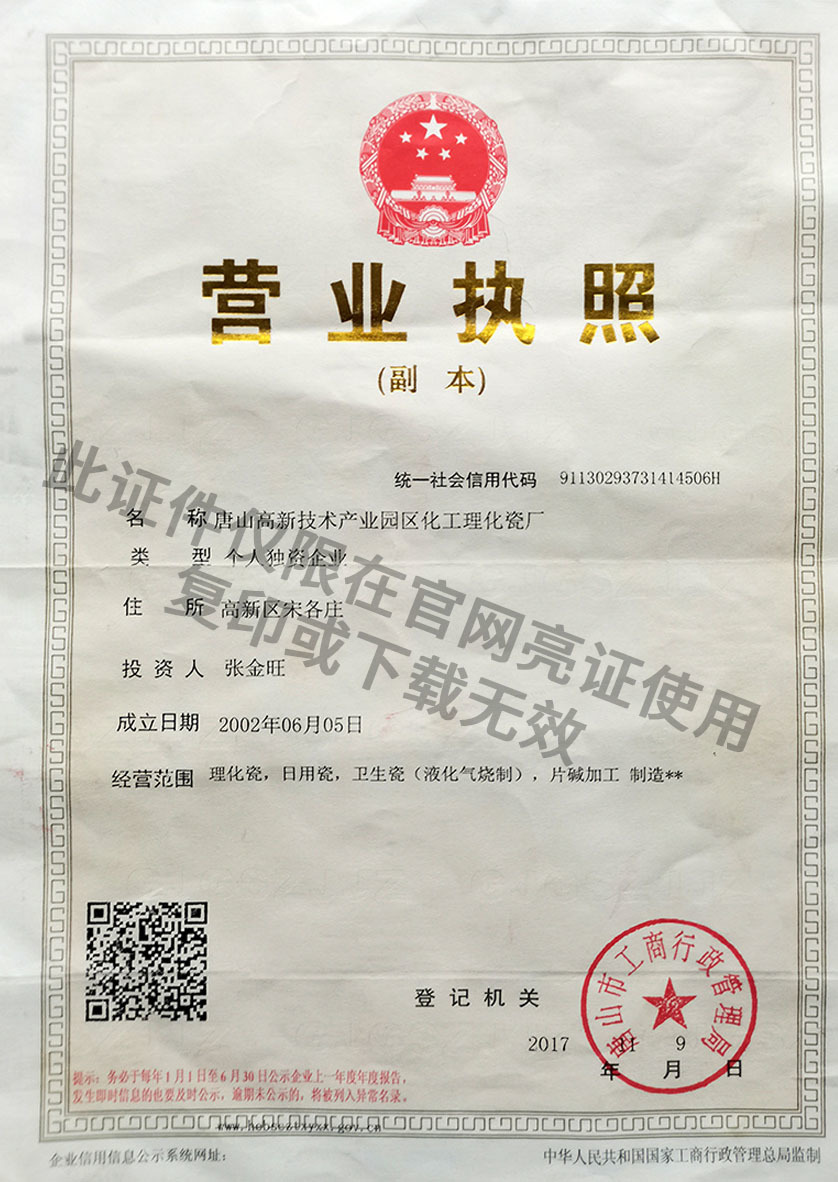
Tangshan High-tech Industrial Park Chemical Physical and Chemical Porcelain Factory
Tangshan Physical and Chemical Ceramics Co., Ltd.
Address: Songgezhuang Chemical and Physical Porcelain Factory, Tangshan High-tech Industrial Development Zone
Telephone: +86-315-5509570 、 +86-315-5509222
Mobile: +86-13903372399 、+86-13832559317
Email: tshglhcc@163.com


Product Center
Follow Us

Online Consultation
If you have any needs, please leave a message, and we will contact you as soon as possible.