Porcelain crucible manufacturers share the applications and precautions of various ceramic crucibles
2022-05-12
Crucibles, as an important component of chemical equipment, are containers used for melting and refining metal liquids and heating solid-liquid reactions, forming the basis for smooth chemical reactions. Initially, crucibles were made of clay; one of the earliest uses of platinum was in the manufacture of crucibles. Porcelain Crucible Manufacturers With the development of preparation techniques, crucibles can now be made from any material capable of melting or altering its contents.
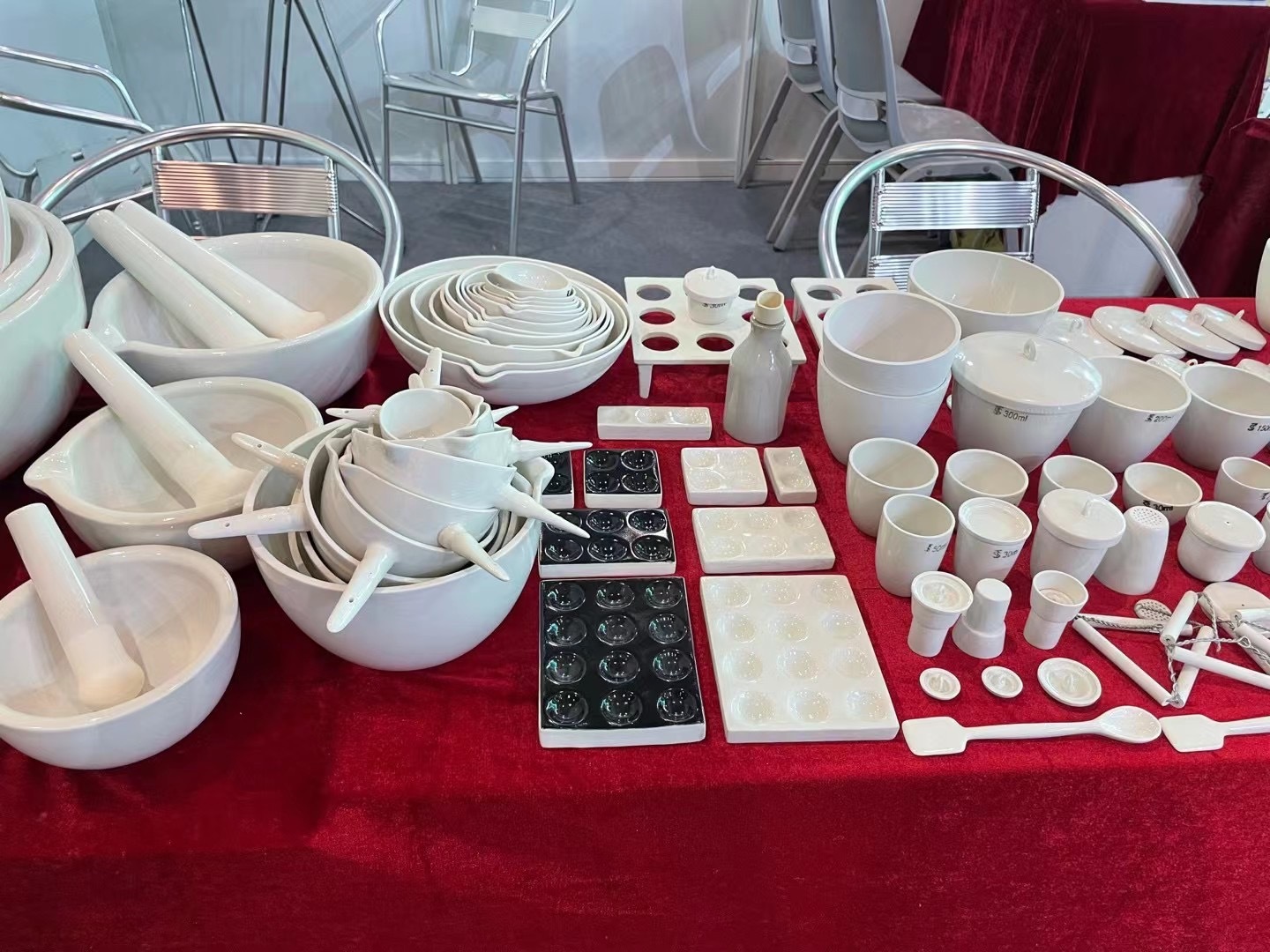
Crucibles come in various types, models, and specifications, offering wide selection and strong applicability, ensuring the purity of the melt. Ceramic crucibles are an important component. They can be classified into quartz, alumina, boron nitride, zirconia, etc., and are used in different situations based on their different properties.
1. Quartz Ceramic (99.9% silica content)
These are ceramic crucibles made from high-purity molten materials, featuring fine structure, low thermal conductivity, low thermal expansion coefficient, good thermal shock resistance, good electrical properties, and good chemical resistance. They are widely used in the glass deep processing industry, metallurgy, electronics, chemical industry, aerospace, and other fields. Generally, their shapes are mainly square and cylindrical.
2. Alumina (Aluminum Oxide)
Alumina, formally known as aluminum oxide crucible, is usually called alumina when the aluminum oxide content exceeds 95%. Porcelain Crucible Manufacturers It is strong, refractory, high-temperature resistant, acid and alkali resistant, cold and heat resistant, and chemically corrosion resistant. It is suitable for anhydrous melting of weakly alkaline substances such as Na2CO3 but not for melting samples with water. Various sizes and shapes are available depending on the application conditions.
3. Boron Nitride
Common types of boron nitride include cubic (C-BN) and pyrolytic (P-BN). Nitrogen is usually composed of P-BN. P-BN ceramics have good heat resistance, thermal stability, thermal conductivity, and high-temperature dielectric strength, making them ideal heat dissipation and high-temperature insulation materials. P-BN crucibles are often used in the smelting of metals and semiconductors, with temperatures up to 1800 degrees in a vacuum.
4. Zirconia
Zirconia has a higher melting point than zirconium and is one of the most refractory materials in nature. Even when heated to 1900, it does not react with molten aluminum, iron, nickel, platinum metals, silicates, or acidic slag, so it can successfully melt precious metals such as platinum, palladium, ruthenium, and cesium, and their alloys.
5. Yttria
Yttria ceramic is a high-performance ceramic with excellent heat resistance, corrosion resistance, and high-temperature stability. With a melting point above 2400, it is difficult to react with some active metals (such as Ti, Al, Hf, Nb, etc.). Porcelain Crucible Manufacturers At high temperatures, the crucible has the potential for melting titanium and titanium alloys or any melting process sensitive to oxygen. However, yttria has a high melting point and is difficult to process. Because yttria itself is very brittle, the crucible may crack if the heating or cooling rate is too fast.
Recommended news
2026-05-23
2026-04-08
Tangshan High-tech Industrial Park Chemical Physical and Chemical Porcelain Factory
Tangshan Physical and Chemical Ceramics Co., Ltd.
Address: Songgezhuang Chemical and Physical Porcelain Factory, Tangshan High-tech Industrial Development Zone
Telephone: +86-315-5509570 、 +86-315-5509222
Mobile: +86-13903372399 、+86-13832559317
Email: tshglhcc@163.com


Product Center
Follow Us

Online Consultation
If you have any needs, please leave a message, and we will contact you as soon as possible.