Domestic vs imported alumina tube: quality, cost, and lead time review
2026-11-17
Tangshan High-tech
Domestic vs imported alumina tube: quality, cost, and lead time review
An alumina tube is a hollow, sintered Al2O3 ceramic cylinder built for heat, insulation and chemical resistance. For Singapore buyers, the practical question is whether a locally stocked alumina tube or a directly imported one is the better deal on quality, cost and lead time.
The short answer: local stock wins on speed and small orders, direct import wins on unit price and custom geometry, and quality depends on the datasheet and batch paperwork rather than the route. This review shows how to test that claim with your own numbers, using 2026 planning assumptions for Singapore alumina tube buyers.
Article overview
This review compares locally stocked and directly imported alumina tube supply for Singapore laboratories, semiconductor facilities and furnace builders. It covers quality, landed cost, lead time, a selection procedure, a worked example and a supplier checklist. Property values are typical published ranges, so confirm them against your batch datasheet.
Table of contents
- 1. What domestic and imported alumina tube mean for Singapore buyers
- 2. Quality: purity, density and batch consistency
- 3. Cost: unit price versus landed cost
- 4. Lead time: stock, production and shipping
- 5. How to choose between local stock and direct import
- 6. Choosing an alumina tube supplier in Singapore
- 7. Frequently asked questions
What domestic and imported alumina tube mean for Singapore buyers
In Singapore, “domestic” almost always means an alumina tube held in a local distributor’s inventory, while “imported” means ordering from an overseas factory yourself. Local ceramic firing capacity is generally limited, so the real difference is who carries stock, paperwork and transit risk, not where the powder was sintered.
What is an alumina tube?
Alumina tube refers to a cylindrical component made by extruding or pressing aluminium oxide powder and sintering it at high temperature. Listings may call it an alumina ceramic tube, Al2O3 ceramic tube or aluminium oxide tube, and it sits within the wider family of technical ceramic components and refractory ceramic tube products. The compound melts near 2,072 °C and scores 9 on the Mohs scale, which explains its role as a high temperature ceramic tube.
For background on this alumina material, Britannica explains its occurrence, manufacture and uses in abrasives, refractories and ceramics. Pure alumina is also known as corundum in its crystalline form, and sintered tubes are essentially dense polycrystalline corundum.
Which tube types do buyers actually order?
Most orders fall into four groups. An alumina furnace tube or alumina tube for tube furnace work forms the heating chamber. An alumina protection tube shields sensors, and the closed-end alumina thermocouple sheath is the best-known example. An alumina insulator tube isolates conductors, while alumina ceramic rod and tube sets are often bought together for supports and fixtures. Each type has different tolerance needs, which later affects the best supply route.
Where do Singapore users apply them?
Demand for alumina tube in Singapore clusters around university and research-institute laboratories, semiconductor and electronics process lines, and heat-treatment or ceramics workshops in industrial estates such as Jurong and Tuas. Laboratories tend to buy few pieces and need them fast. Production sites buy repeatable sizes in volume. That split is the root of the domestic-versus-import debate, because the two buyer types value opposite things.
How are alumina tubes made?
Producers form each alumina tube by extrusion for long, thin-walled shapes or by isostatic pressing for dense, thicker sections, then dry them slowly and sinter at very high temperature so the grains fuse into a dense body. Slip casting suits larger or irregular shapes. Each step influences density, straightness and strength, which is why a cheap tube and a careful tube can look identical on the shelf yet diverge in the furnace. Ask which forming method was used when straightness matters.
Why does the supply route change the decision?
Because the Al2O3 chemistry is the same, the route changes service attributes: stock depth, documentation, returns and speed. It is like choosing between a neighbourhood hardware shop and a factory outlet; the screws may be identical, but the buying experience differs sharply. Of course, some grades and sizes are simply not stocked locally, which forces the import route regardless.
Quality: purity, density and batch consistency
Quality differences between local-stock and imported alumina tube come from purity grade, density, tolerance and documentation, not from the import route itself. A 99.7% alumina tube from a competent factory should perform the same whether it arrives through a Tuas warehouse or a direct air consignment.
Which purity grade should you choose?
Purity is the first filter. A high purity alumina tube, typically 99.5–99.8%, contains fewer glassy grain-boundary phases, so it keeps strength and gas-tightness at high temperature. Grades near 95% cost less and suit insulators or moderate duty. A frequent pattern in furnace troubleshooting is specifying a lower grade for a 1,600 °C cycle and then seeing sag or leakage. Why does this keep happening? Because price lists rarely print maximum use temperature next to the price.
Table 1 compares typical published ranges. Treat them as screening values, not batch guarantees.
| Property | 99.7% alumina | 95% alumina | Fused quartz |
|---|---|---|---|
| Bulk density (g/cm³) | 3.85–3.90 | 3.60–3.75 | about 2.2 |
| Max continuous use, oxidising air | about 1,700 °C | about 1,500 °C | about 1,100–1,200 °C |
| Thermal expansion, 20–1,000 °C (×10⁻⁶/K) | about 8 | about 7.5–8 | about 0.5 |
| Flexural strength (MPa) | 300–380 | 280–330 | 50–70 |
| Thermal shock tolerance | low to moderate | low to moderate | very high |
Ranges reflect commonly published technical datasheet values; always verify for your own batch.
Does a higher purity number always mean a better alumina tube?
Not always. Moving from 99.5% to 99.7% may help in clean, very high temperature or semiconductor-related processes where trace impurities such as sodium could contaminate samples, yet it adds cost that a 1,300 °C annealing job will never repay. Microstructure matters as much as the headline figure: fine, uniform grains generally give better strength and gas-tightness than coarse ones. Match the grade to contamination sensitivity and peak temperature rather than chasing the highest percentage.
How do tolerances and finish differ?
Standard-size alumina tube stock is usually sold with as-fired tolerances, often around ±1% of the dimension, while ground tubes hold tighter limits at higher cost. Direct import opens custom options, such as closed-end alumina protection tube lengths or a specific bore for an alumina thermocouple sheath. Check straightness, wall thickness and end-face squareness, because a bowed alumina tube can bind inside a furnace. Of course, tighter tolerance only matters if your fixtures actually need it.
How does density affect performance?
Density tracks porosity. A dense alumina tube with near-zero open porosity resists gas permeation and slag penetration, which matters for vacuum work and for an alumina protection tube sitting in a melt or reactive gas. Higher-porosity refractory ceramic tube grades trade gas-tightness for better thermal shock behaviour and lower cost. Neither is wrong; the application decides. Atmosphere also counts, since alkali vapours and some fluxes attack alumina at high temperature, so check chemical compatibility before ordering.
What paperwork proves quality?
Ask for a certificate of conformance listing purity, bulk density, lot number and dimensions. Incoming checks are cheap: measure OD, ID and length with calipers, roll the alumina tube on a flat plate to spot bow, and tap-test it. A clear ring suggests no hidden cracks, while a dull sound deserves closer inspection.

Engineered ceramics owe their hardness, heat resistance and chemical stability to composition and processing, so two parts with the same name can behave differently if raw materials or firing differ. (Paraphrased from the American Ceramic Society overview of engineered ceramics.)
That consensus, reflected in the engineered ceramics overview, is why batch documentation outranks geography when you compare suppliers.
Cost: unit price versus landed cost
Directly imported alumina tube usually carries the lower ex-works price, but a locally stocked alumina tube can win once freight, GST, minimum order quantity, breakage and idle capital are counted. The break-even point depends mostly on order size and reorder frequency.
Is a locally stocked alumina tube always more expensive?
No. For one to a few tubes, fixed freight and handling charges dominate, so a distributor’s margin is often smaller than the import overhead. For larger batches the fixed costs spread out and import pulls ahead. Singapore helps importers somewhat: Singapore Customs levies duty only on a few categories, such as liquor, tobacco, motor vehicles and petroleum products, so ceramic parts normally attract no customs duty. GST at 9% still applies to imports, and GST-registered firms can usually claim it back; confirm the treatment with your accountant.
Recommended news
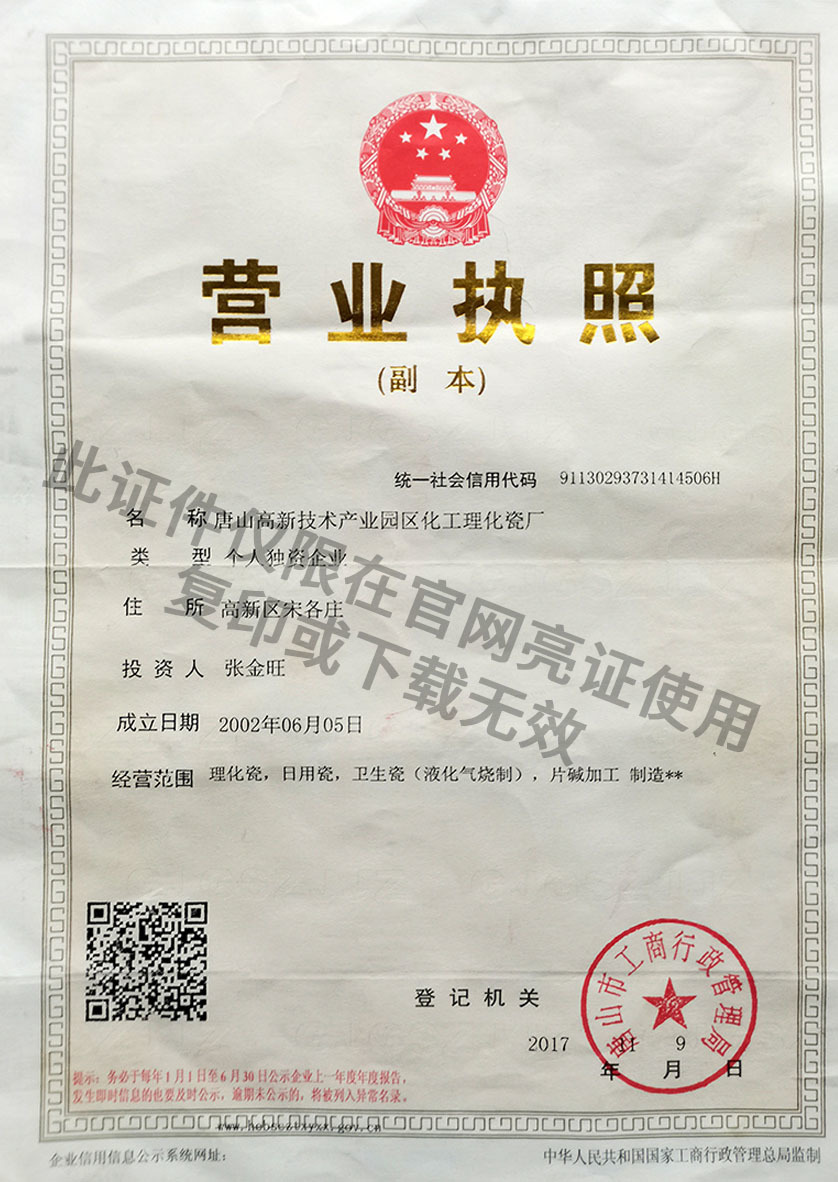
Tangshan High-tech Industrial Park Chemical Physical and Chemical Porcelain Factory
Tangshan Physical and Chemical Ceramics Co., Ltd.
Address: Songgezhuang Chemical and Physical Porcelain Factory, Tangshan High-tech Industrial Development Zone
Telephone: +86-315-5509570 、 +86-315-5509222
Mobile: +86-13903372399 、+86-13832559317
Email: tshglhcc@163.com


Product Center
Follow Us

Online Consultation
If you have any needs, please leave a message, and we will contact you as soon as possible.