language
Characteristics and applications of straight crucible
2024-02-26
In this article, I will write for you an article on the topic of high-temperature ceramics: "Characteristics and Applications of Straight Crucible". Let's start exploring them! **Characteristics and Applications of Straight Crucible** In industrial and laboratory fields, high-temperature ceramic products play an indispensable role. Straight crucibles (also known as crucible bottles), as a common type of ceramic ware, have unique characteristics and a wide range of applications. Let's take a closer look at this special ceramic product. **Characteristics** First, high-temperature ceramic straight crucibles have excellent high-temperature resistance. Due to their special material, straight crucibles can withstand the heat at extreme high temperatures, maintaining stable structure and performance. This makes it an ideal choice for many high-temperature experiments and processes. Second, straight crucibles have good corrosion resistance. Various acidic and alkaline substances are often encountered in chemical experiments and industrial production, and high-temperature ceramic crucibles can resist the erosion of these corrosive substances, ensuring the stability and safety of the experimental or production process. In addition, straight crucibles have precise size and shape design. They are usually designed in a straight cylindrical shape, making it easy to load experimental samples or substances and ensuring uniform heat distribution, thereby improving the accuracy and repeatability of the experiment.
In this article, I will write for you an article on the topic of high-temperature ceramic "Characteristics and Applications of Straight Crucible". Let's start exploring them!
**Characteristics and Applications of Straight Crucible**
In industrial and laboratory fields, high-temperature ceramic products play an indispensable role. Straight crucibles (also known as crucible bottles), as a common type of ceramic ware, have unique characteristics and a wide range of applications. Let's take a closer look at this special ceramic product.
**Characteristics**
First, high-temperature ceramic straight crucibles have excellent high-temperature resistance. Due to their special material, straight crucibles can withstand the heat at extreme high temperatures, maintaining stable structure and performance. This makes it an ideal choice for many high-temperature experiments and processes.
Secondly, straight crucibles have good corrosion resistance. Various acidic and alkaline substances are often encountered in chemical experiments and industrial production, and high-temperature ceramic crucibles can resist the erosion of these corrosive substances, ensuring the stability and safety of the experimental or production process.
In addition, straight crucibles have precise size and shape design. They are usually designed in a straight cylindrical shape, making it easy to load experimental samples or substances and ensuring uniform heat distribution, thereby improving the accuracy and repeatability of the experiment.
**Applicable Scenarios**
High-temperature ceramic straight crucibles are widely used in many fields. In high-temperature processes such as metal smelting, glass manufacturing, and ceramic production, straight crucibles are used as containers for melting, sintering, and heat treatment processes, ensuring stability and safety under high-temperature conditions.
In chemical laboratories, straight crucibles are often used in experiments such as high-temperature baking, sample calcination, and material analysis, helping researchers conduct various precise chemical reactions and experimental operations.
In addition, straight crucibles are also widely used in pottery making and the art field. Ceramic artists use the high-temperature resistance and good molding characteristics of straight crucibles to create various unique ceramic works, showcasing the aesthetics and creativity of pottery.
In general, high-temperature ceramic straight crucibles, with their excellent performance characteristics and wide range of applications, have become indispensable important vessels in industrial production, scientific research experiments, and artistic creation.
**Characteristics and Applications of Straight Crucible**
In industrial and laboratory fields, high-temperature ceramic products play an indispensable role. Straight crucibles (also known as crucible bottles), as a common type of ceramic ware, have unique characteristics and a wide range of applications. Let's take a closer look at this special ceramic product.
**Characteristics**
First, high-temperature ceramic straight crucibles have excellent high-temperature resistance. Due to their special material, straight crucibles can withstand the heat at extreme high temperatures, maintaining stable structure and performance. This makes it an ideal choice for many high-temperature experiments and processes.
Secondly, straight crucibles have good corrosion resistance. Various acidic and alkaline substances are often encountered in chemical experiments and industrial production, and high-temperature ceramic crucibles can resist the erosion of these corrosive substances, ensuring the stability and safety of the experimental or production process.
In addition, straight crucibles have precise size and shape design. They are usually designed in a straight cylindrical shape, making it easy to load experimental samples or substances and ensuring uniform heat distribution, thereby improving the accuracy and repeatability of the experiment.
**Applicable Scenarios**
High-temperature ceramic straight crucibles are widely used in many fields. In high-temperature processes such as metal smelting, glass manufacturing, and ceramic production, straight crucibles are used as containers for melting, sintering, and heat treatment processes, ensuring stability and safety under high-temperature conditions.
In chemical laboratories, straight crucibles are often used in experiments such as high-temperature baking, sample calcination, and material analysis, helping researchers conduct various precise chemical reactions and experimental operations.
In addition, straight crucibles are also widely used in pottery making and the art field. Ceramic artists use the high-temperature resistance and good molding characteristics of straight crucibles to create various unique ceramic works, showcasing the aesthetics and creativity of pottery.
In general, high-temperature ceramic straight crucibles, with their excellent performance characteristics and wide range of applications, have become indispensable important vessels in industrial production, scientific research experiments, and artistic creation.
Recommended news
2026-05-23
2026-04-08
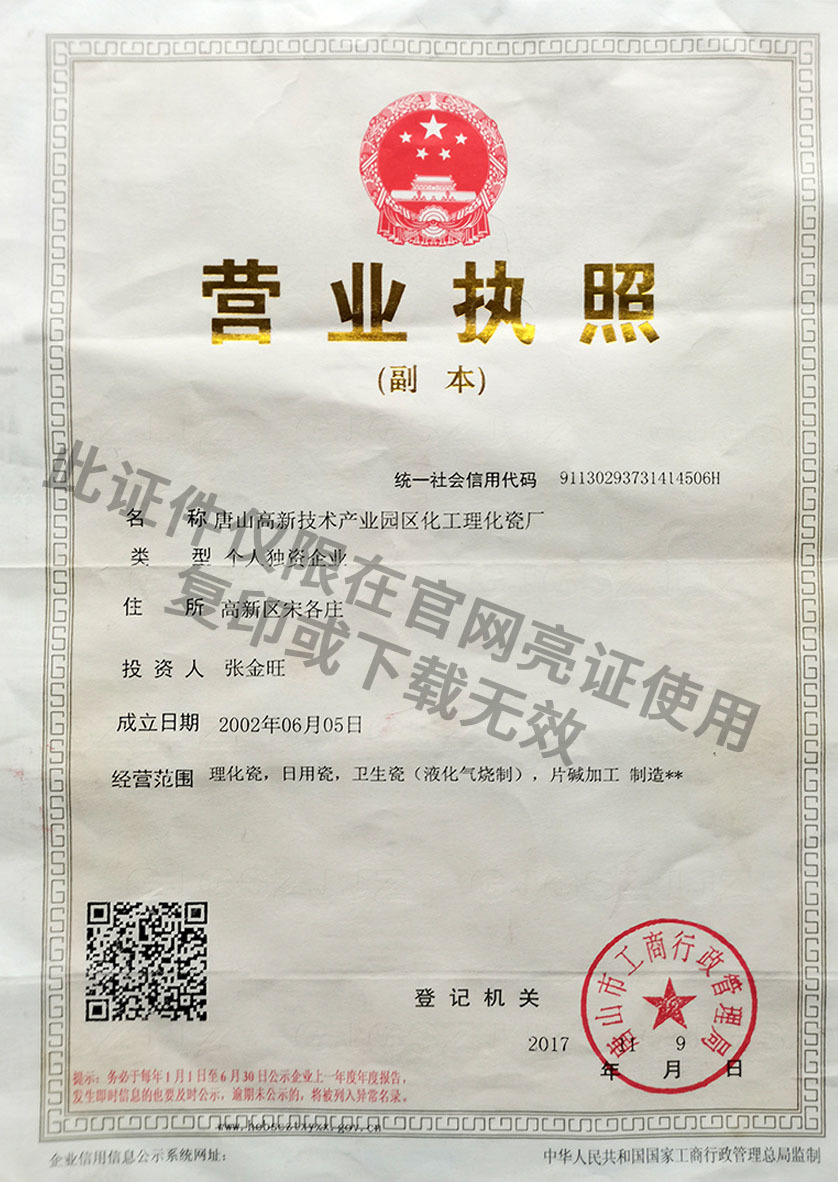
Tangshan High-tech Industrial Park Chemical Physical and Chemical Porcelain Factory
Tangshan Physical and Chemical Ceramics Co., Ltd.
Address: Songgezhuang Chemical and Physical Porcelain Factory, Tangshan High-tech Industrial Development Zone
Telephone: +86-315-5509570 、 +86-315-5509222
Mobile: +86-13903372399 、+86-13832559317
Email: tshglhcc@163.com


Product Center
Follow Us

Online Consultation
If you have any needs, please leave a message, and we will contact you as soon as possible.