Key points for using crucibles, as told by a manufacturer of corundum crucibles
2022-02-17
Corundum crucible Manufacturer believes Crucibles are an important part of chemical instruments. They are containers for melting and refining metal liquids, solid-liquid heating and reactions, and are the basis for ensuring that chemical reactions proceed smoothly. Crucibles come in many models and specifications, and are highly adaptable, ensuring the purity of the melted materials. However, in the laboratory, special attention must be paid to the use process according to the characteristics of different crucibles.
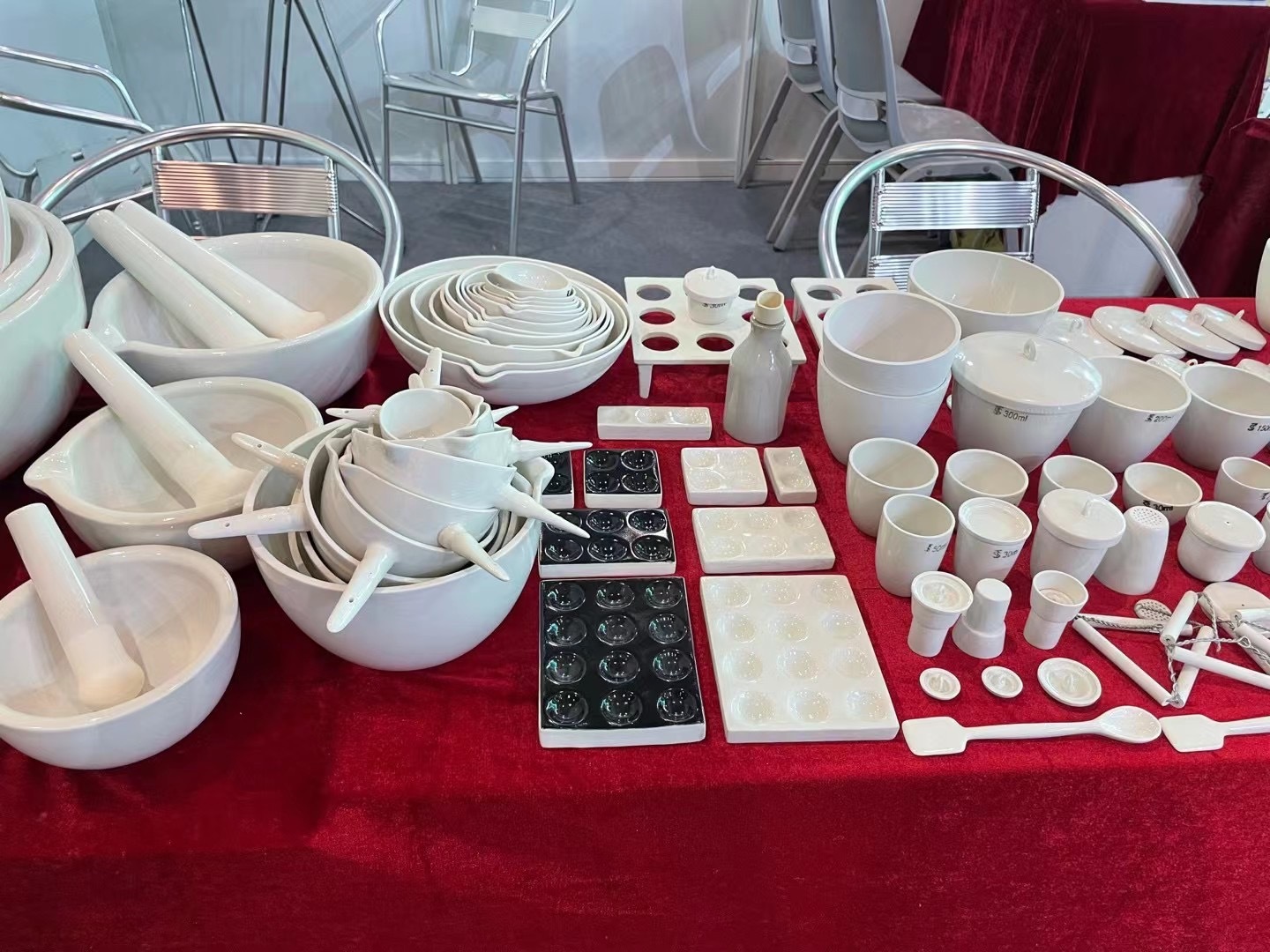
Corundum crucible Manufacturer believes When solids need to be heated with a high flame, a crucible is used. When using a crucible, the crucible lid is usually placed tilted on the crucible to prevent the heated object from jumping out and to allow air to enter and exit freely for possible oxidation reactions. Because the bottom of the crucible is small, it usually needs to be placed on a clay triangle for direct heating. The crucible can be placed straight or tilted on an iron tripod, or placed as needed according to the experiment. The crucible should not be placed immediately on a cold metal table after heating to avoid cracking due to rapid cooling. Do not place it directly on a wooden table to avoid burning the table or causing a fire. The correct method is to let it cool naturally on a tripod or cool slowly on an asbestos net. Please use crucible tongs to approach the crucible.
Corundum crucible Manufacturer believes platinum crucible should follow these rules:
(1) Establish a strict system for the collection, use, consumption, and recycling of platinum.
(2) Corundum crucible Manufacturer believes Platinum is soft, even alloys containing small amounts of rhodium and iridium are soft, so take platinum crucible When handling, do not use excessive force to avoid deformation. When melting, do not scrape sharp objects such as glass rods from the platinum crucible to avoid damaging the inner wall. In addition, do not put the hot platinum crucible suddenly into cold water to avoid cracking. Deformed platinum crucibles or containers can be corrected using a shape-matching water mold (but brittle platinum carbide parts should be corrected with even force).
(3) Corundum crucible Manufacturer believes When heating, platinum crucible it cannot come into contact with any other metal, because platinum is easily alloyed with other metals at high temperatures, so the platinum crucible is placed on a platinum tripod or a support made of ceramic, clay, or other materials for combustion, or heated on a hot plate or electric furnace with an asbestos board, but it cannot be in direct contact with the iron plate or electric furnace wire. The crucible tongs used should have platinum-coated heads; nickel or stainless steel tongs can only be used at low temperatures.
Corundum crucible Manufacturer believes platinum crucible Cleaning method:
Corundum crucible Manufacturer believes If platinum crucible there are spots, they can be treated with hydrochloric acid or nitric acid respectively. If this does not work, potassium pyrosulfate can be put into the platinum container and melted at a lower temperature for 5-10 minutes. After pouring out the melt, immerse the platinum container in hydrochloric acid solution. If it still doesn't work, you can try sodium carbonate fusion treatment again, or gently scrub with wet fine sand (passed through a 100-mesh sieve, i.e., 0.14 mm mesh).
Recommended news
2026-05-23
2026-04-08
Tangshan High-tech Industrial Park Chemical Physical and Chemical Porcelain Factory
Tangshan Physical and Chemical Ceramics Co., Ltd.
Address: Songgezhuang Chemical and Physical Porcelain Factory, Tangshan High-tech Industrial Development Zone
Telephone: +86-315-5509570 、 +86-315-5509222
Mobile: +86-13903372399 、+86-13832559317
Email: tshglhcc@163.com


Product Center
Follow Us

Online Consultation
If you have any needs, please leave a message, and we will contact you as soon as possible.