A brief description of the production and forming process of quartz ceramic crucibles
2021-08-19

With increasing environmental awareness, the introduction of incentive measures, and the global adjustment of energy structures, the photovoltaic industry has become one of the representatives of the inevitable trend of new energy replacing traditional energy. Solar quartz ceramic crucible enterprises are upstream enterprises in the photovoltaic industry chain, relying on the photovoltaic industry for survival and development. Quartz ceramic crucibles (also known as solar crucibles) are made of high-melting-point materials. Ceramic Crucible Generally speaking, its shape is mainly square and cylindrical. Among them, square high-purity crucibles are used in the polysilicon casting process as containers for polysilicon and crystal growth; round quartz ceramic crucibles are used for single crystal growth in single crystal silicon pulling.
Photovoltaic Industry Quartz Ceramic Crucible Situation of Enterprises in the Photovoltaic Industry: In recent years, with the continuous attention and development of environmentally friendly energy, solar energy, as a green energy source, has been widely developed and utilized, leading to a sharp increase in the consumption of polysilicon for solar energy conversion. Therefore, it has promoted the rapid development of polysilicon production, and the consumption of correspondingly large-size, thin-walled, square fused quartz ceramic crucibles has also been rapidly increasing. This product has a good international market. Fused quartz ceramic crucibles are widely used in polysilicon production and non-ferrous metal smelting industries due to their good thermal stability and corrosion resistance. And it does not pollute the processed products. Ten years ago, square crucibles used for ingot casting in polysilicon enterprises and quartz crucibles used for crystal pulling in single crystal silicon enterprises all needed to be imported, but now they have almost achieved 100% domestic production.
It has two molding methods: slip casting and injection setting molding. Slip casting is a method of molding by injecting prepared quartz ceramic slurry into a high-performance gypsum mold, using the water absorption of the gypsum mold to solidify the slurry, obtaining a quartz crucible blank, drying and firing to obtain quartz Ceramic Crucible . This method has been used for a long time in ceramic production and is easy to master. This is a currently popular molding method. Because it takes a long time to demold and solidify the slurry using gypsum molds, the production efficiency is relatively low. The prepared product has high density, good wear resistance, and low apparent porosity. In the injection molding method, organic additives are added to the primary quartz ceramic slurry, and then injected into a special mold for molding. The monomer molecules in the slurry will undergo a polymerization reaction to form a gel network, thereby solidifying the quartz ceramic slurry into a ceramic green body, high-temperature drying and sintering to obtain a quartz ceramic crucible. This method has some technical difficulties in molding, and currently only a few manufacturers in China have mastered it. The green body formed by this molding method can be quickly formed, is easy to demold, has high strength after demolding, is suitable for large-scale and rapid production, and is the future development direction. The crucible green body prepared has high strength and is more suitable for manufacturing ultra-large-size products. At the same time, it has a uniform structure and excellent thermal shock resistance and high-temperature resistance.
The photovoltaic industry should be a sunrise industry in the new century, meeting the human pursuit of clean energy and is one of the ideal ways to solve the problems of energy shortage and environmental pollution. After severe challenges, China's crucible industry will surely usher in huge development opportunities. Quartz Ceramic Crucible The conditions of use are very harsh, and there are strict requirements on the purity, appearance defects, internal quality, and dimensional accuracy of the quartz raw materials.
Recommended news
2026-05-23
2026-04-08
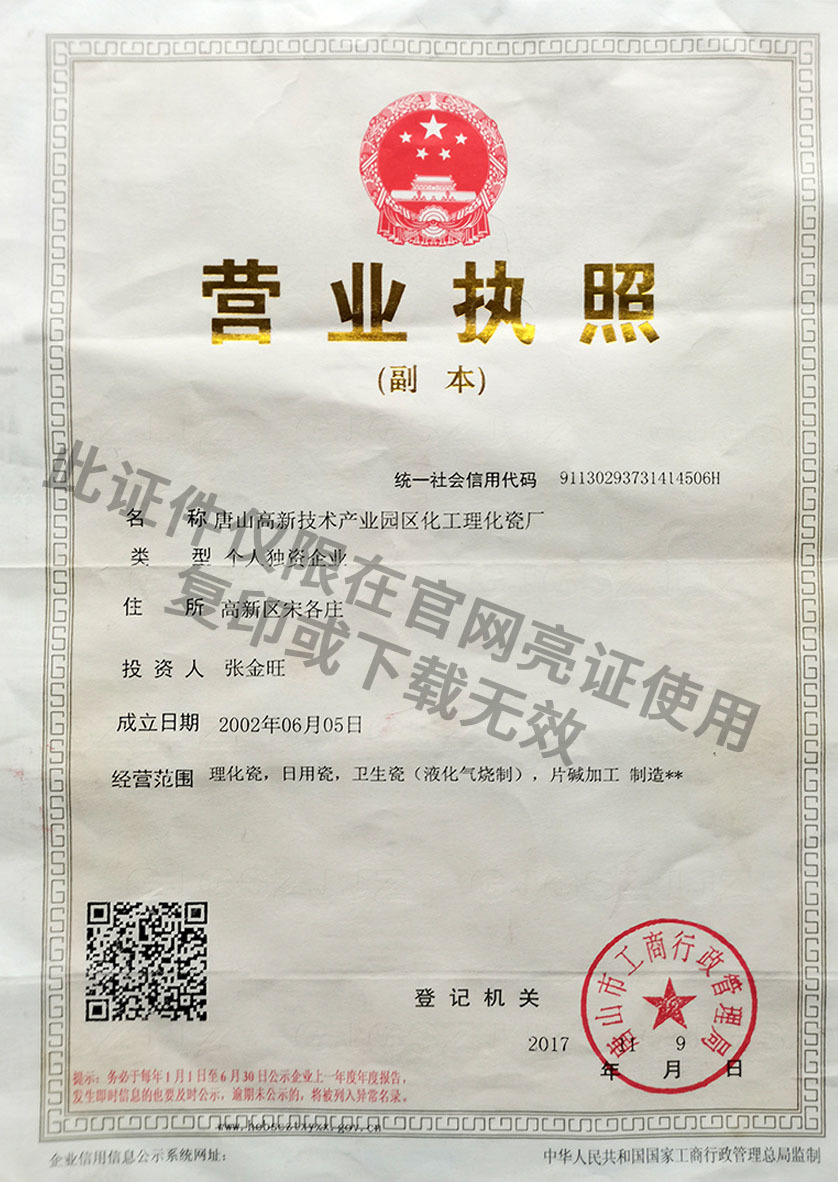
Tangshan High-tech Industrial Park Chemical Physical and Chemical Porcelain Factory
Tangshan Physical and Chemical Ceramics Co., Ltd.
Address: Songgezhuang Chemical and Physical Porcelain Factory, Tangshan High-tech Industrial Development Zone
Telephone: +86-315-5509570 、 +86-315-5509222
Mobile: +86-13903372399 、+86-13832559317
Email: tshglhcc@163.com


Product Center
Follow Us

Online Consultation
If you have any needs, please leave a message, and we will contact you as soon as possible.